
Scaling a Vehicle Subscription PlatformLeading cross-functional design decisions across consumer, enterprise, and operational systems.

Photo credit: Dribe CEO Lars Eegholm shows consumers how easy the subscription app is to use. Dribe 2018
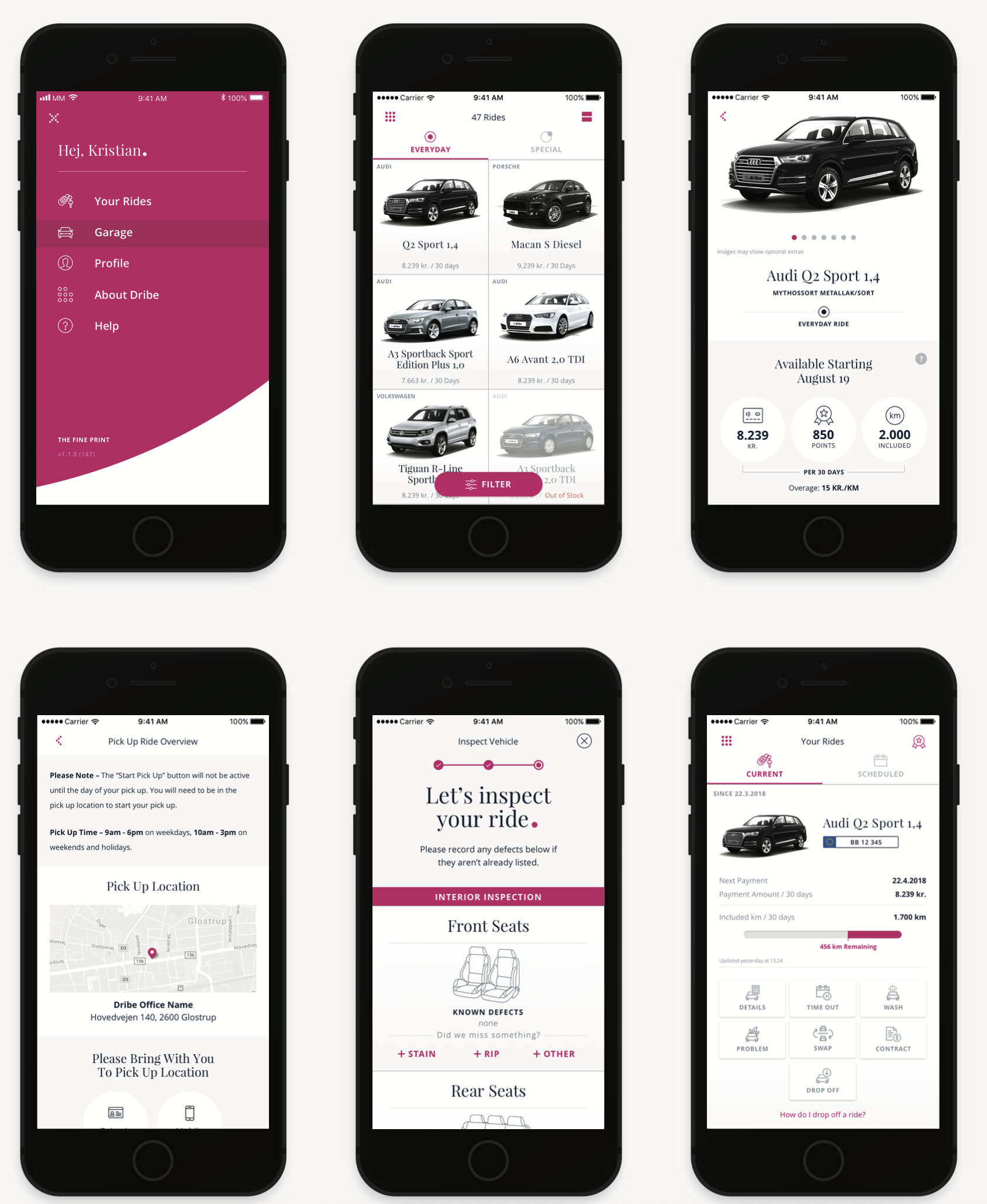
Disclaimer: Wireframes in the image were designed by Sean Dellis. Visual design/ brand by Gigi Chang
Overview
Role: Experience Director
Company: Mutual Mobile
Client: Dribe (Denmark)
Engagement Type: Long-term, integrated product team
Focus: B2C & B2B React Native apps + internal portals
Problem Framing
In Denmark, vehicle ownership costs can exceed 250% of comparable levels in the U.S., making traditional car ownership out of reach for much of the population. Dribe set out to introduce a vehicle subscription model that removed the long-term commitment of ownership while complying with strict regulatory, insurance, and identity verification requirements.
The experience extended beyond a consumer app. The platform needed to support:
new user behaviors around short-term vehicle access
enterprise use cases for employee mobility programs
internal operational workflows for customer service and inventory
aggressive speed-to-market expectations
By the time I joined the engagement, early design concepts had already been produced with a strong emphasis on visual style and UI scalability. However, there was very little insight into how the product would scale as a system, from both consumer and business perspectives.
This knowledge gap had resulted in long-term design debt.
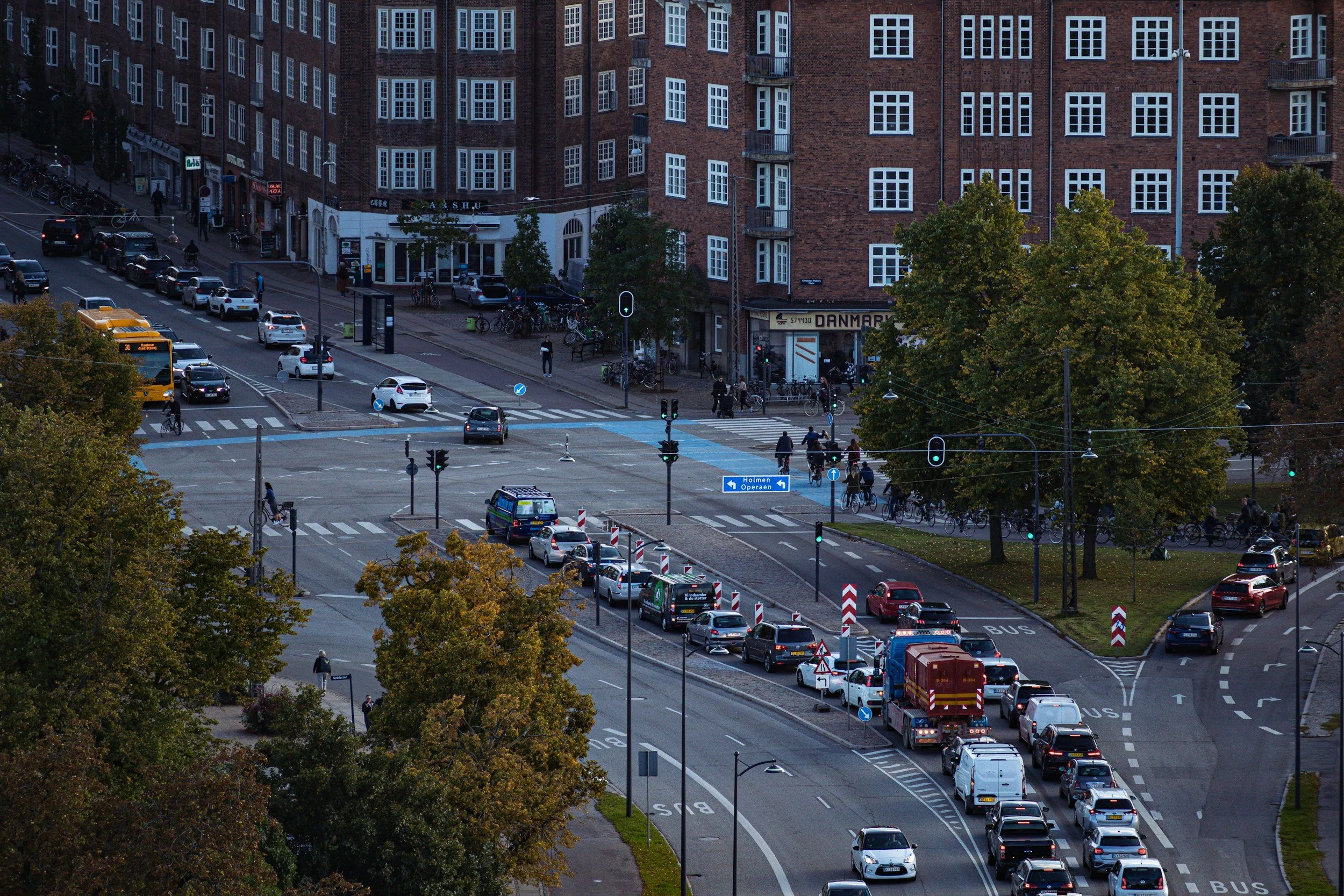
Photo credit: Squarespace stock image
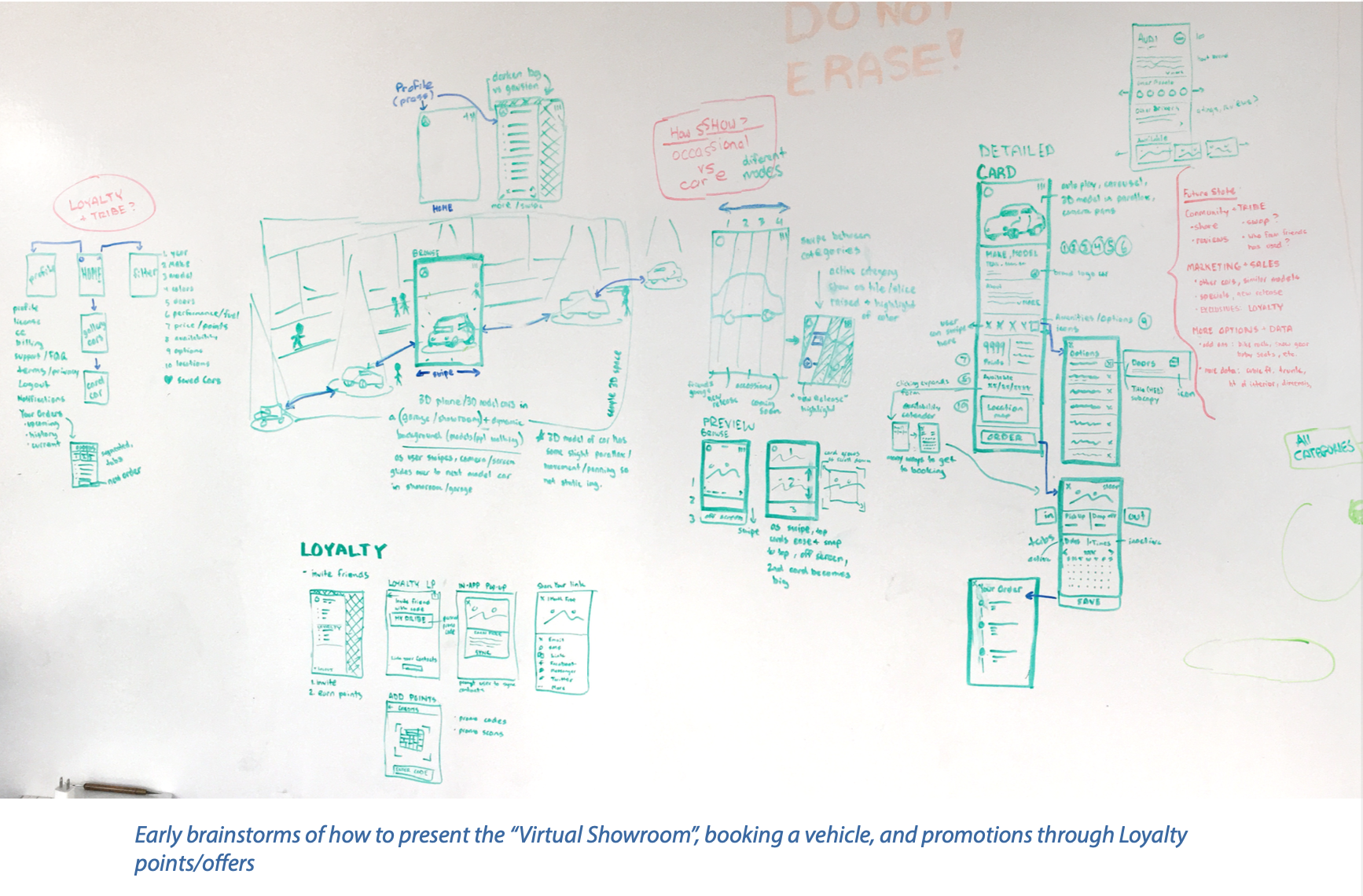
Disclaimer: Whiteboard sketches created by Carlos Menchaca.
Role and Ownership
The underlying principle guiding my leadership was simple:
It is impossible to scale a product responsibly without understanding the system it operates in—even when insight is incomplete and speed is critical.
As Experience Director, my responsibility was not to design screens myself, but to establish clarity, collaboration, and decision-making discipline across a growing product organization.
I led and oversaw a team of three designers:
2 UX Designers
1 Visual Designer
My role focused on:
co-owned product strategy and delivery as part of the Product Triad, functioning in a head of platform design role
leading strategy-to-execution translation across consumer, enterprise, and internal products, enabling fast decisions grounded in desirability, feasibility, and viability
maintaining tight stakeholder alignment through weekly syncs and quarterly in-person planning, using shared artifacts and a reusable component library to keep teams aligned across time zones
Platform Overview
Dribe’s platform consisted of multiple interconnected products built on a shared backend:
B2C App (React Native)
Consumer experience for onboarding, identity verification, vehicle discovery, booking, and payments.
B2B App (React Native)
Enterprise experience enabling companies to manage and subsidize employee subscriptions.
Operational & Concierge Portals
Internal tools supporting customer service, inventory management, and partner administration.
Although each surface served a different audience, all depended on the same underlying data relationships and business rules—making coherence essential.
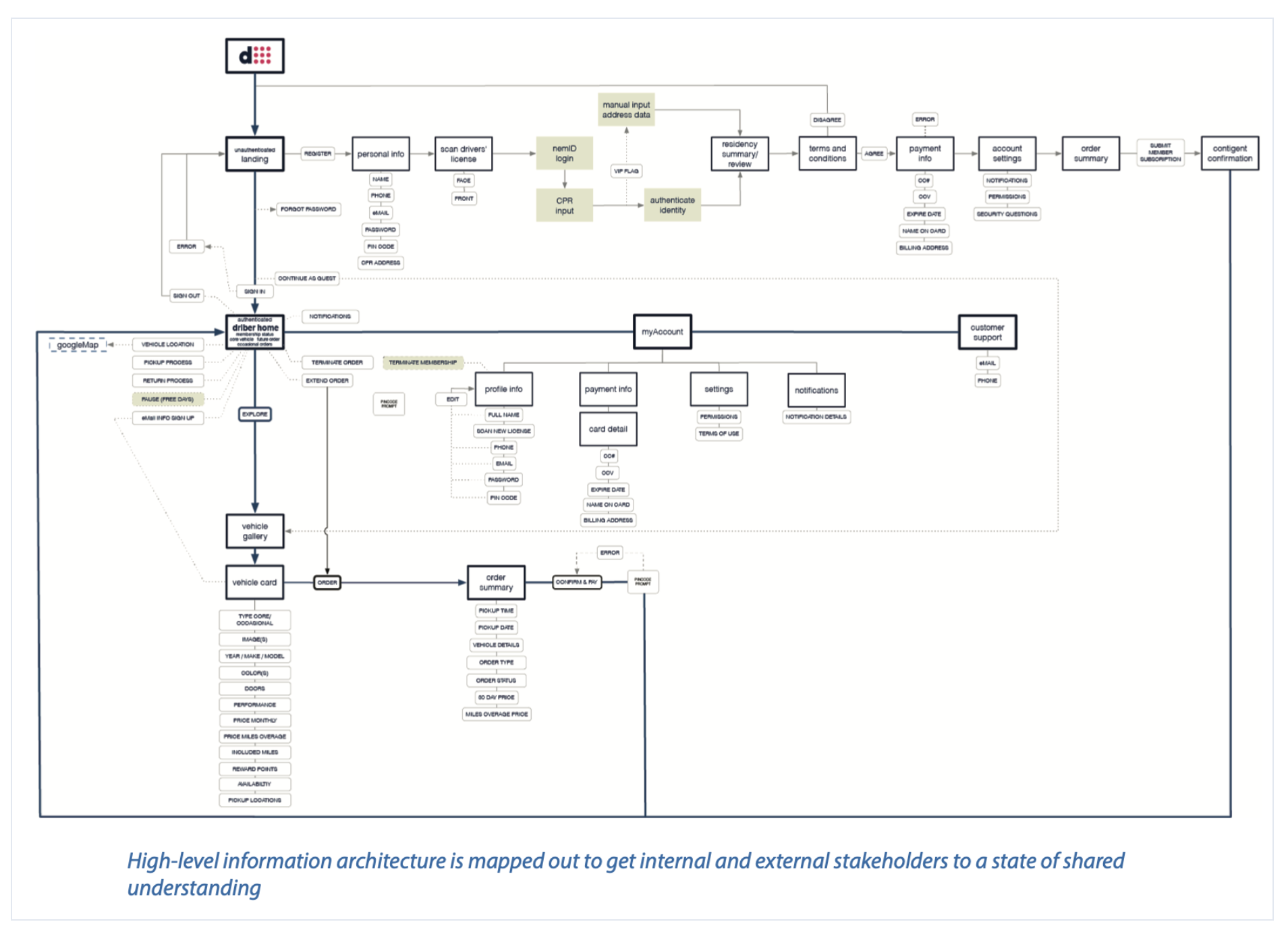
Disclaimer: Diagram created by Carlos Menchaca.
Initial Challenges
As a result:
designs were repeatedly reworked as constraints evolved
UX decisions were made in isolation from system realities
visual consistency drifted as features were revised
significant effort was spent maintaining work rather than converging toward scalable solutions
The issue was not a lack of ideas but the absence of a collaborative decision-making structure for addressing real-world constraints.
When I joined the project, the primary challenge was not UI quality—it was how the team was working.
The product organization had adopted a largely linear, assembly-line model. Design work was being produced 6+ months ahead of development, often without timely input from engineering, operations, or legal.
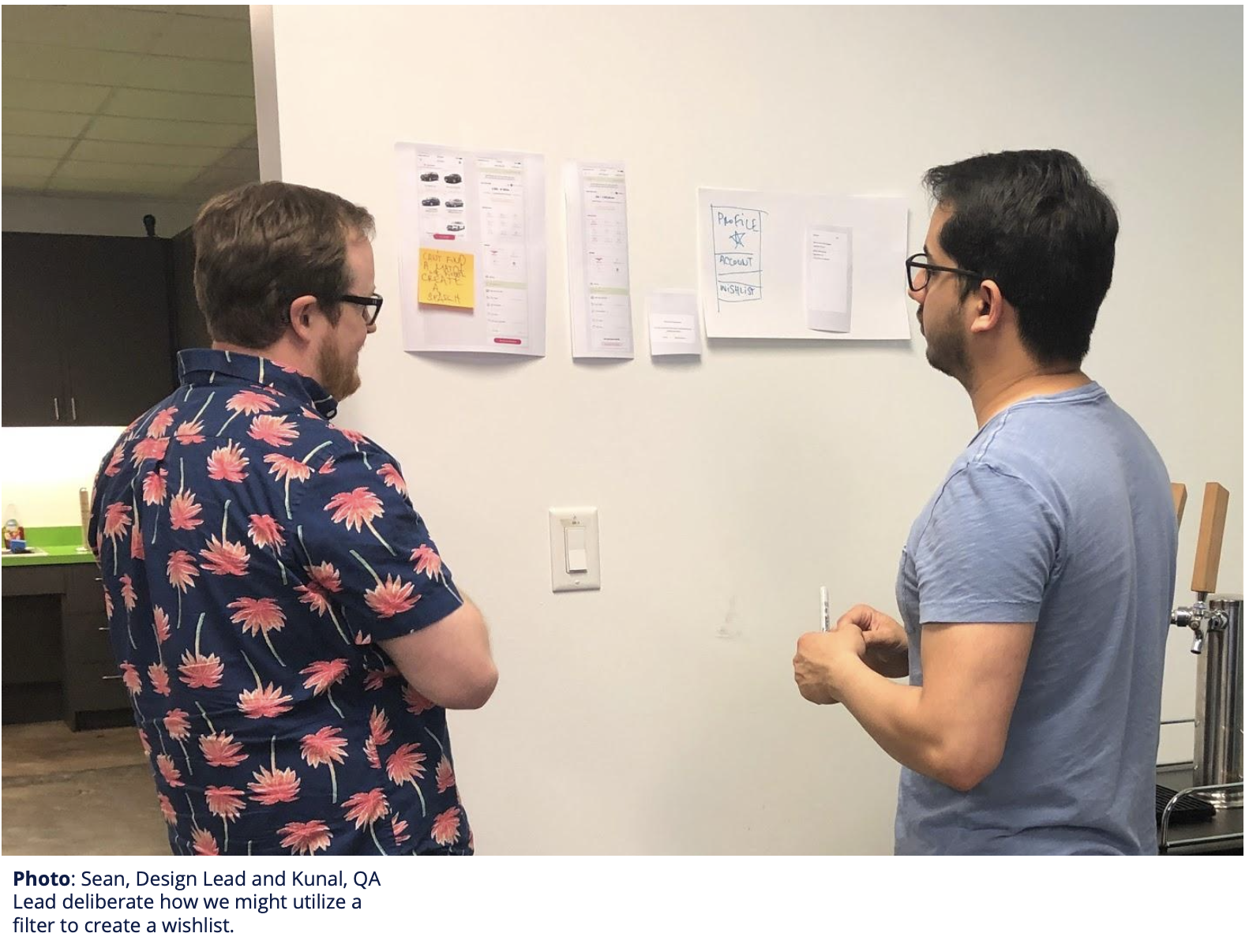
Enabling Design Execution at the Right Level
To support consistent execution, I focused on structural interventions rather than screen-level control.
I paired the Visual Designer directly with front-end developers to collaboratively design and build a shared, reusable component library. Together, they created modular, pre-built components that could be used across consumer, enterprise, and internal products.
This approach:
established a single source of truth for UI components
aligned design intent with production code
reduced duplication and visual drift
enabled faster iteration without sacrificing consistency or brand integrity
By embedding design directly into the engineering workflow at the component level, UX designers were freed to focus on flows, states, and system behavior, while the interface remained cohesive as the platform evolved.
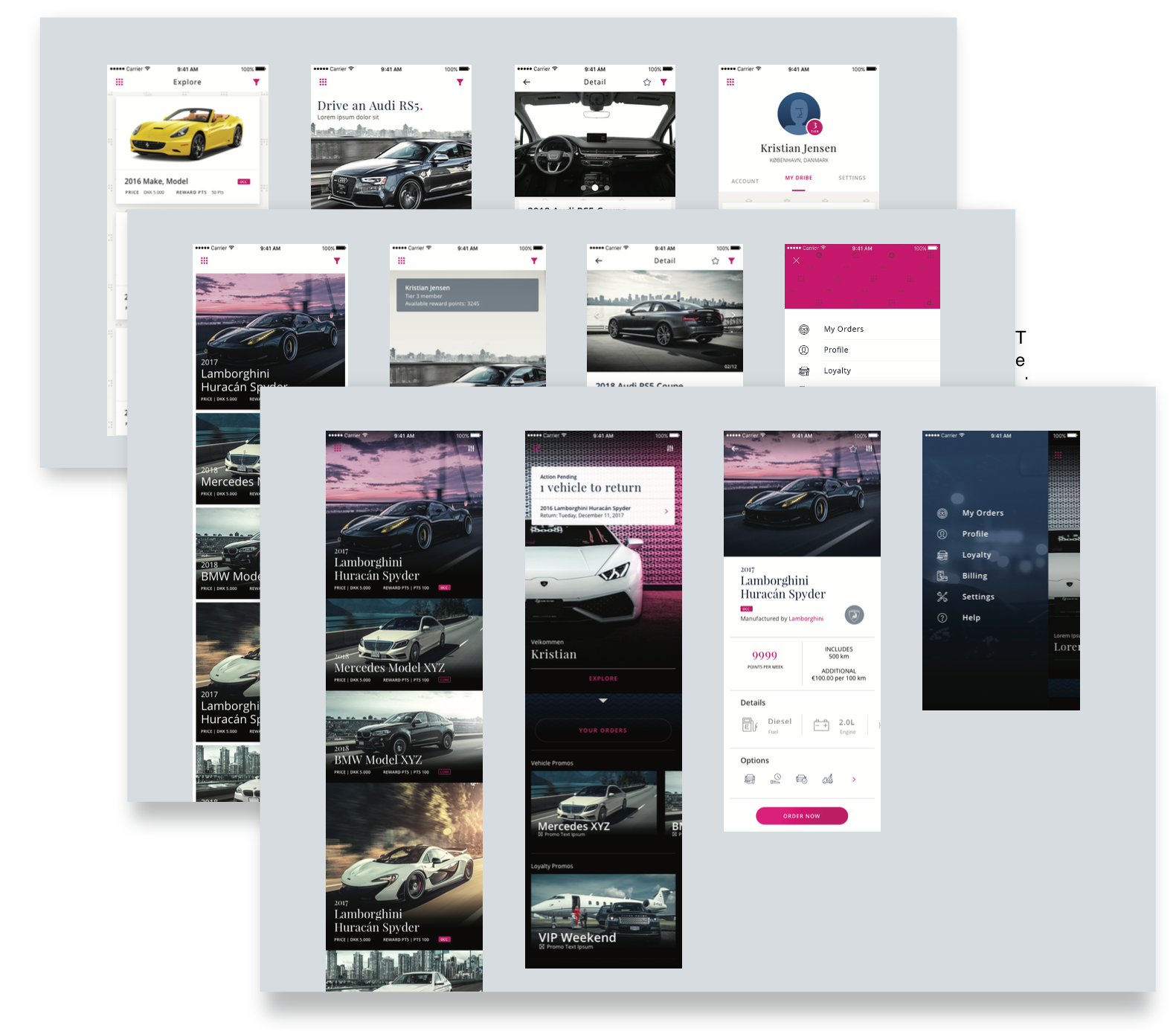
Disclaimer: Early concepts created by Carlos Menchaca.
Constraints and Tradeoffs
A significant organizational constraint in this engagement was the expectation of traditional design leadership, in which a Director serves as a senior individual contributor, closely controlling design decisions and outcomes.
Given the absence of rigorous research and the aggressive delivery timeline, this approach centralized decision-making around personal judgment and aesthetic preference. I deliberately made a tradeoff not to operate this way.
Dribe was a mobility service for citizens of Denmark, with distinct cultural norms, commuting behaviors, regulatory expectations, and relationships to car ownership. Designing from personal preference—or relying on the authority of a single decision-maker—would have introduced bias and increased the risk of building solutions that did not scale or resonate locally.
Instead, I prioritized evidence-led decision-making and shared understanding over individual control.
By introducing a reusable, modular component library and pairing the Visual Designer with front-end engineers to build it collaboratively, the team gained a shared, concrete understanding of:
what was technically feasible
what constraints were real vs assumed
how design decisions translated into production code
This shifted design conversations away from subjective preference and toward co-design grounded in system reality. UX Designers were empowered to reason within constraints, rather than design in abstraction, and engineers were able to participate meaningfully in shaping the experience.
The tradeoff was intentional: relinquishing centralized design authority in favor of distributed, evidence-informed decision-making. The result was greater alignment, fewer reversals, and designs that aged better as the platform evolved.
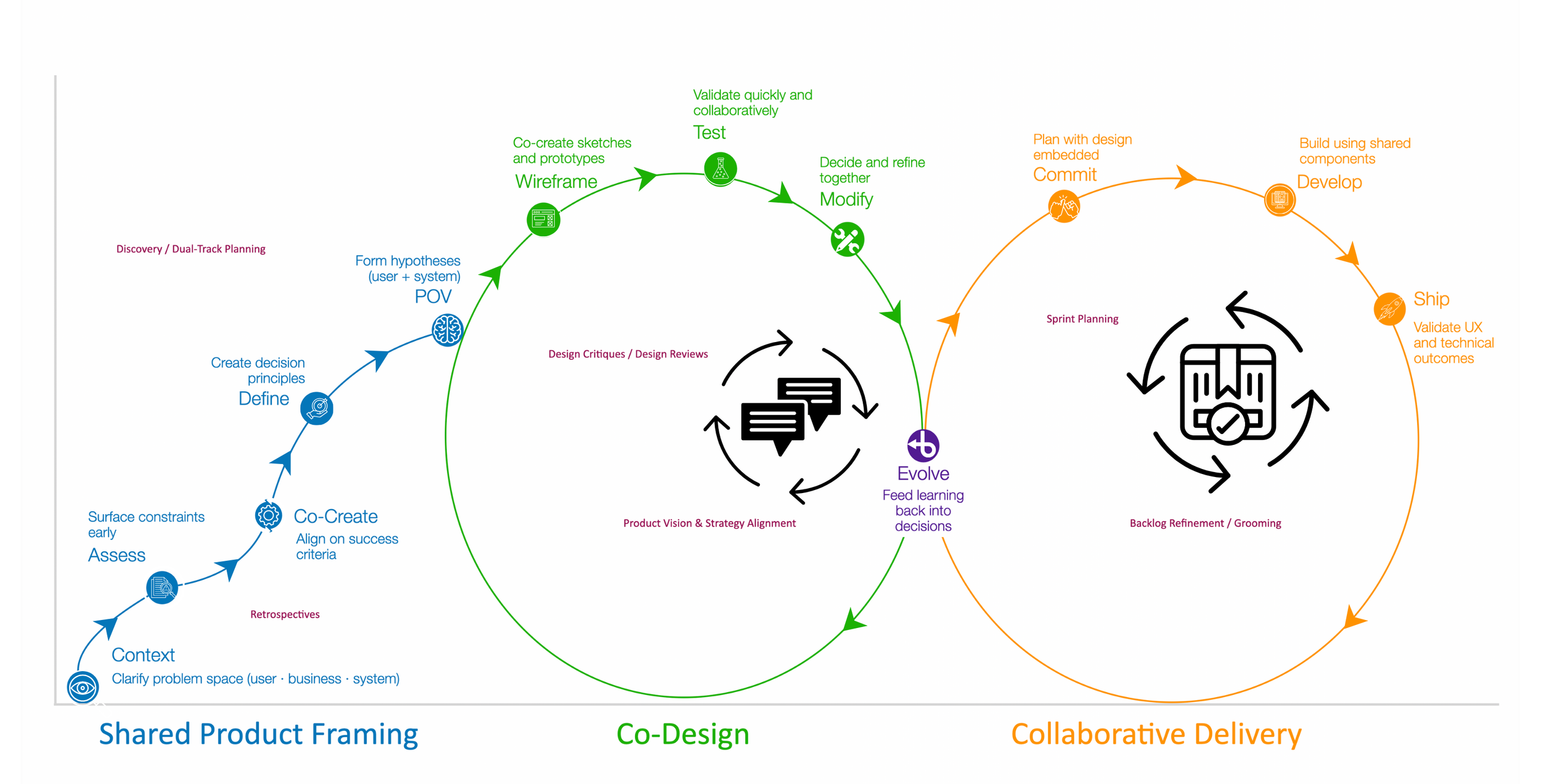
Diagram: I worked with the team to shift from bespoke screen design to a component-driven, decision-led process.
In addition to strategically supporting a scalable subscription platform, this approach produced several critical outcomes:
Reduced design bias by grounding decisions in evidence, feasibility, and shared constraints rather than individual preference
Improved cultural appropriateness by avoiding assumptions rooted in U.S.-centric commuting and mobility norms
Greater team ownership and fluency, as designers and engineers co-designed within a shared system
Faster convergence and less rework, as decisions made collaboratively held up over time
A stronger foundation for scale, with reusable components and durable patterns that supported future markets
By structuring the process so that evidence—not hierarchy—guided decisions, the team was able to move quickly without sacrificing correctness, inclusivity, or long-term viability.
Outcomes
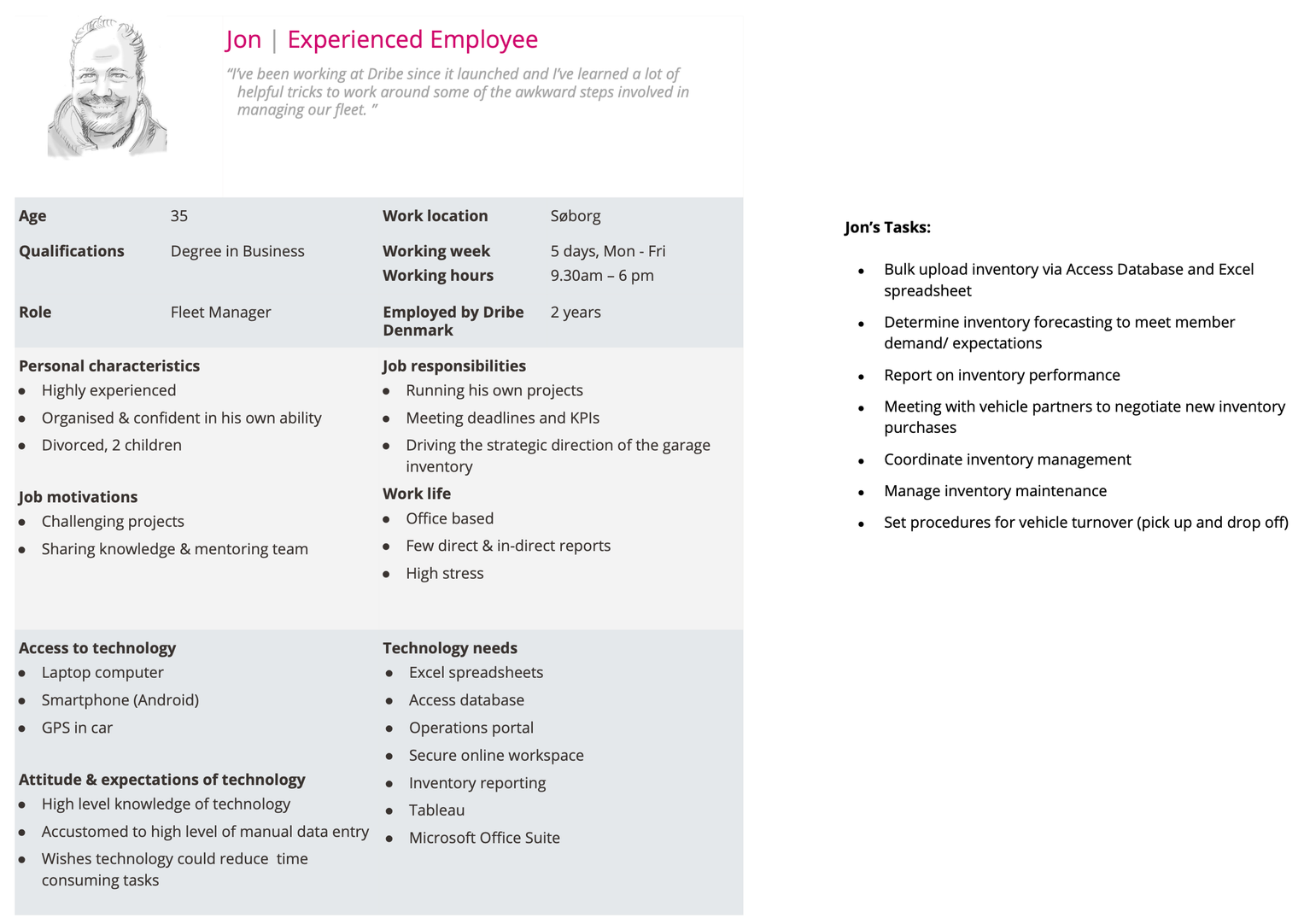
Image: I collaborated with the team to co-create proto-personas, which aligned stakeholders around key end-user types and the specific parts of the Dribe system each uses.
Reflection
This project reinforced a lesson that continues to shape my leadership:
Strong design leadership is less about producing artifacts and more about creating clarity—especially when insight is incomplete and constraints are real.
By shifting the team from assembly-line execution to collaborative, system-aware decision-making, we moved from stalled progress to strategic execution—building a platform that could scale without constant redesign.