
Service Design & Transformation
Designing adaptive organizations for a changing world.
I help organizations understand how work really happens, identify where systems break down, and design the structures, workflows, and capabilities needed to navigate change with confidence.
From AI adoption and workforce transformation to service redesign and organizational renewal, I work across strategy, operations, technology, and human behavior to create solutions that deliver in practice and continue to deliver value as conditions change.

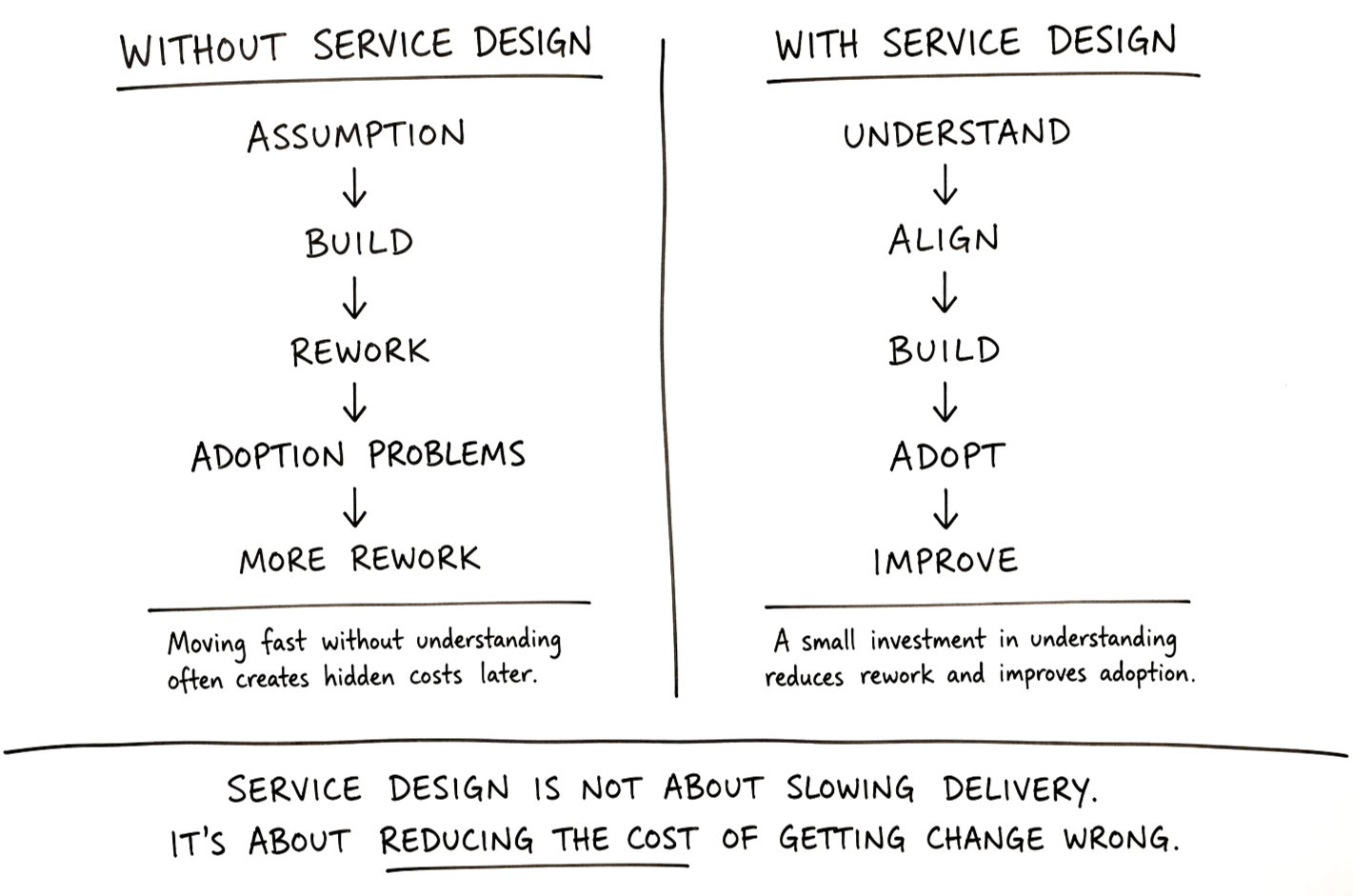
What I do
Research & Discovery
Understanding current-state services, workflows, stakeholder needs, and organizational dynamics.
Outputs
Stakeholder research
Service assessments
Workflow analysis
Opportunity mapping
Transformation diagnostics
Service & Operating Model Design
Designing future-state services, governance structures, workflows, and operating models.
Outputs
Service blueprints
Operating models
Governance frameworks
Future-state service designs
Decision architectures
Transformation & Adoption
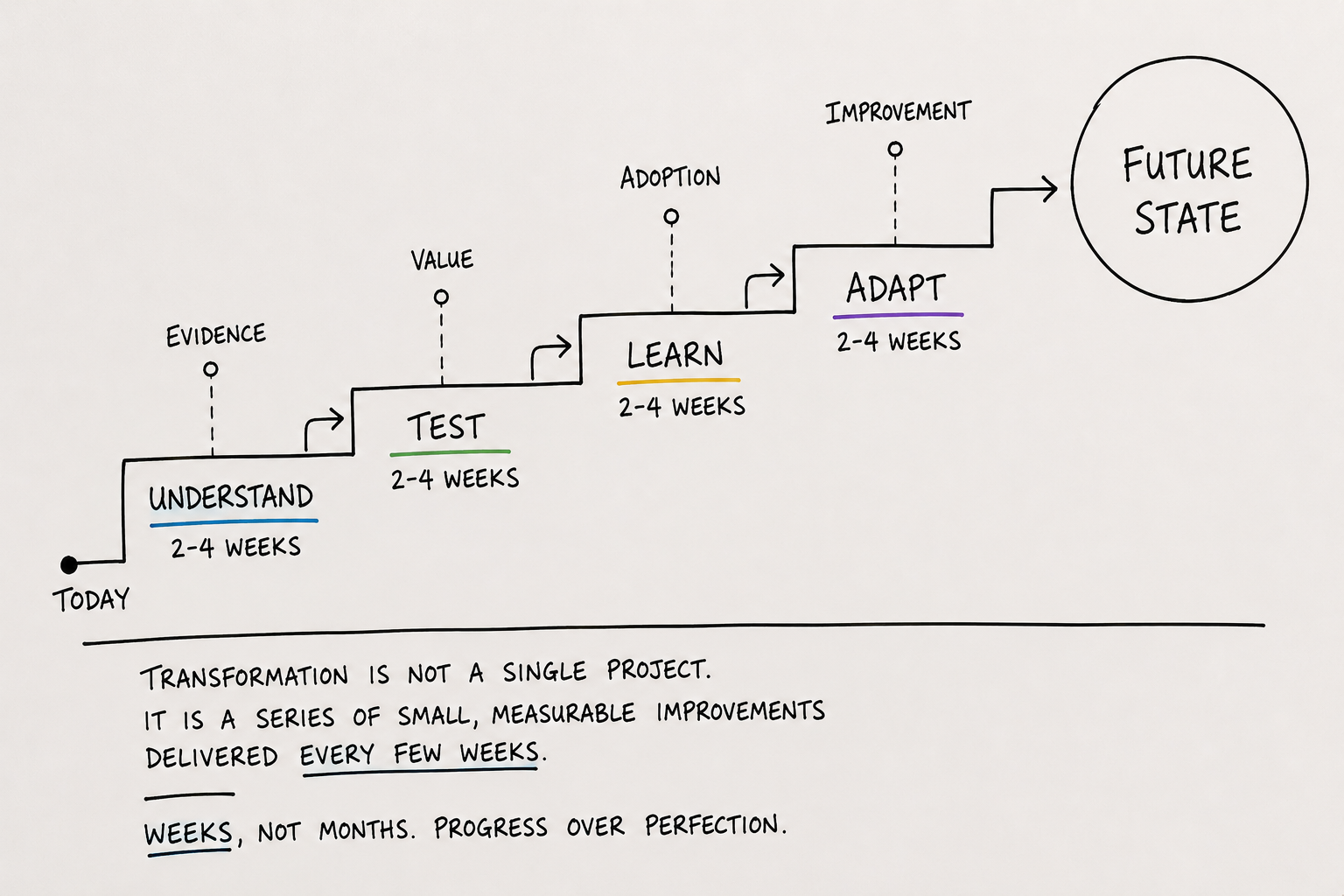
Supporting implementation through alignment, capability building, and change enablement.
Outputs
Transformation roadmaps
Adoption plans
Facilitation workshops
Team alignment
Capability development
Specializations
AI Adoption & Workflow Redesign
When AI is in place but hasn’t meaningfully improved how work gets done.
In many cases, teams use the same system in different ways, workflows don’t align with how the tool actually works, and workarounds start to emerge.
I work with teams to understand how work actually happens, then redesign workflows so AI fits naturally into day-to-day operations.
What changes:
workflows become simpler and more consistent
teams stop working around the system
AI starts supporting real work instead of adding friction
AI Transformation Diagnostics
When AI initiatives aren’t delivering the outcomes you expected.
You may be seeing movement—new tools, new workflows, early results—but something isn’t holding. Teams are adapting in different ways, results are uneven, and it’s not clear why.
I assess how workflows, decisions, and systems function together to identify where breakdowns occur and what needs to change.
What changes:
the real problem becomes clear
teams align around what actually needs to shift
future investments become more targeted and effective
Decision Systems Design
When decisions are inconsistent—or unclear—with AI in the loop.
AI introduces a new layer to decision-making, but most organizations don’t explicitly define how decisions should be made once AI is involved. As a result, teams interpret outputs differently, rely on individual judgment, or avoid using the system altogether.
I design how decisions should function—structuring logic, clarifying ownership, and defining where AI supports or informs judgment.
What changes:
decisions become more consistent across teams
reliance on individual interpretation is reduced
systems scale without introducing variability
Adoption & Enablement Systems
When teams aren’t using the system consistently—or confidently.
Training alone doesn’t change behavior. Without clear reinforcement, feedback loops, and real-world application, adoption drops off quickly.
I design systems that support how people actually learn and apply new ways of working—so usage becomes consistent over time.
What changes:
adoption becomes more predictable
teams gain confidence using the system
new ways of working stick beyond rollout
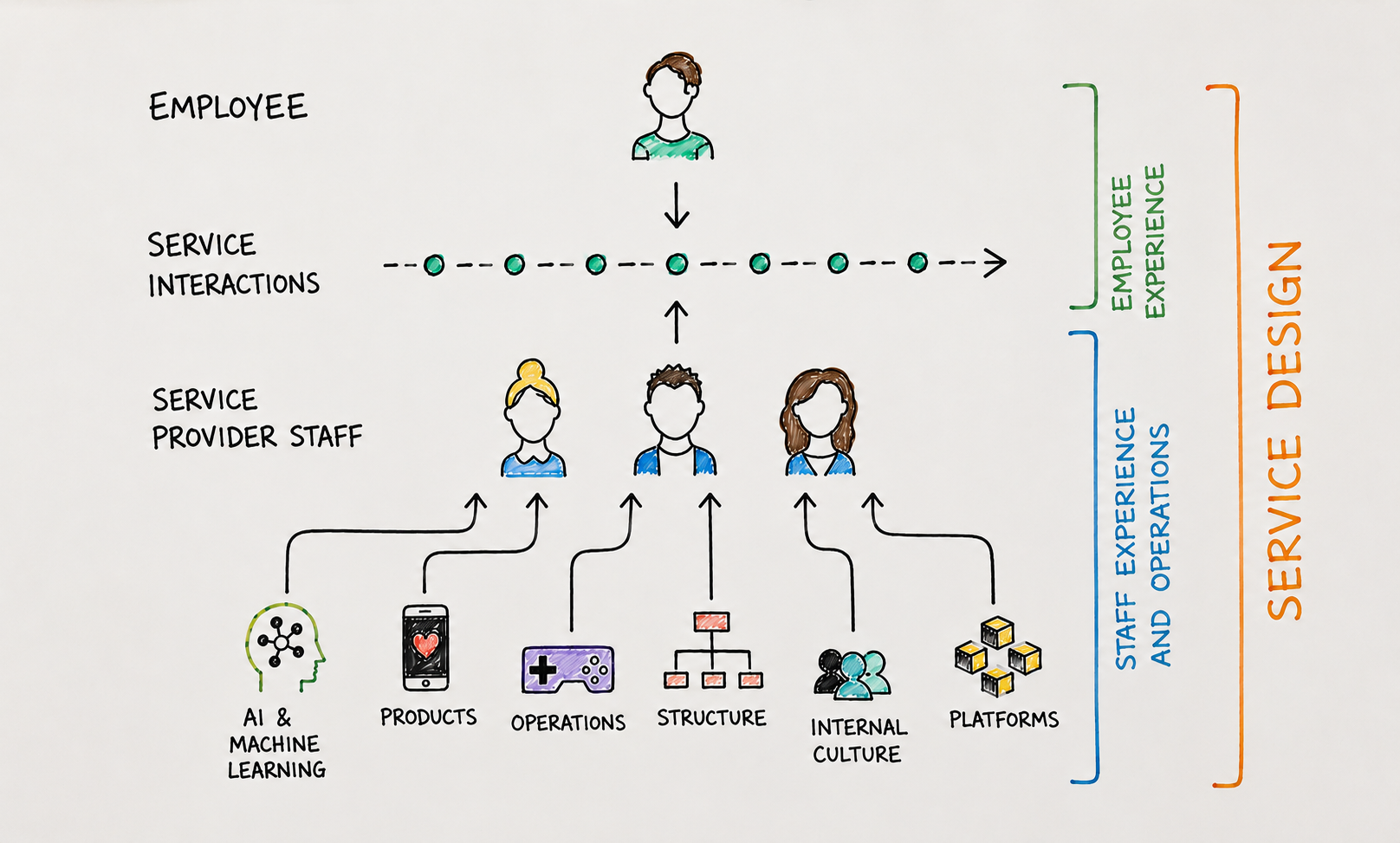
Executive Advisory & Strategic Alignment
Supporting leaders navigating AI uncertainty, trade-offs, and organizational change.
Executive interviews and strategic reflection sessions
Decision framing and trade-off analysis
Facilitation of leadership alignment workshops
Narrative development for internal and external communication
Ongoing advisory support for critical moments
Best for: senior leaders accountable for AI outcomes without clear precedent or playbooks
Responsible & Ethical AI Design
Embedding responsibility, transparency, and governance into AI initiatives from the start.
Ethical risk identification and mitigation
Human-impact and stakeholder analysis
Governance and accountability framework design
Evaluation criteria beyond model performance
Alignment with regulatory and organizational values
Best for: organizations building AI systems that must be trustworthy, defensible, and aligned with public or stakeholder expectations
AI Strategy & Readiness
Aligning AI ambition with organizational reality, capability, and risk.
AI opportunity framing and prioritization
Organizational and data readiness assessment
Stakeholder interviews and capability mapping
Risk, governance, and feasibility analysis
Strategic recommendations and roadmap options
Best for: organizations exploring AI adoption but unsure where to start, what’s feasible, or what actually creates value
AI Adoption & Organizational Integration
Ensuring AI initiatives succeed beyond the model and into everyday operations.
Organizational readiness and change assessment
Workflow and process integration analysis
Incentive and capability alignment
Measurement and learning frameworks
Feedback loops for iteration and evolution
Best for: organizations where AI works in theory but struggles in practice
Why Clients Hire Me
Organizations rarely struggle because they lack ideas.
They struggle because strategy, technology, operations, and human behavior aren't aligned.
I help leaders understand how work actually happens, identify where systems break down, and design the structures needed to make change successful.
Whether the challenge involves AI adoption, service transformation, organizational redesign, or product strategy, my role is to create clarity, alignment, and practical implementation pathways.