Reframing the Transaction Through Field ResearchMapping the End-to-End Commercial Real Estate Transaction Lifecycle
Overview
Role: Associate Experience Director (External Contractor)
Engagement Type: 6-week research engagement
Client Context: Ten-X Commercial (via T3, now Material; MU/DAI as subcontractor)
Industry: Commercial Real Estate / PropTech
Locations: New York City, Los Angeles, Dallas
Overview
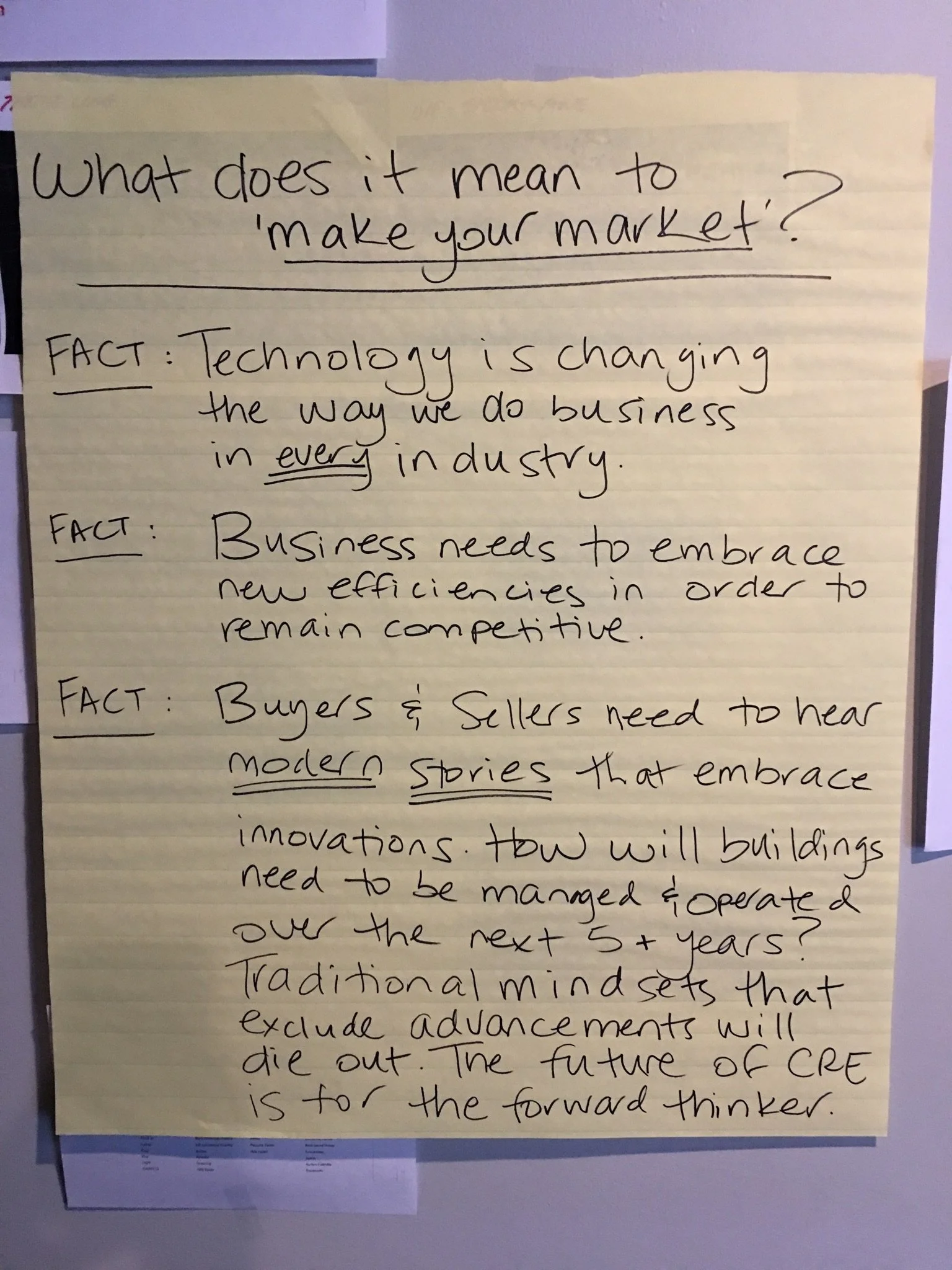
Ten-X Commercial was exploring how to better support commercial real estate practitioners through a digital platform capable of enabling more of the end-to-end transaction lifecycle online. While the company had strong market presence and technology, there was limited shared understanding of how brokers actually worked day-to-day—particularly the relationship-driven, informal, and highly contextual nature of commercial real estate deals.
I was brought in to lead a six-week qualitative research engagement to uncover the real workflows, decision-making patterns, and pain points involved in commercial real estate transactions, and to identify opportunities where Ten-X could deliver meaningful value without disrupting the “art of the deal” that practitioners rely on.
My Role
As Associate Experience Director, I led the engagement end-to-end while serving as an external contractor embedded within the T3 team. I was responsible for:
Shaping the research approach and scope
Leading and conducting field research
Managing and mentoring two researchers from T3
Synthesizing insights into strategic opportunity areas
Translating findings into experience and service implications for Ten-X
I worked closely with T3 leadership and Ten-X stakeholders to ensure findings were grounded, credible, and actionable.
Research Approach
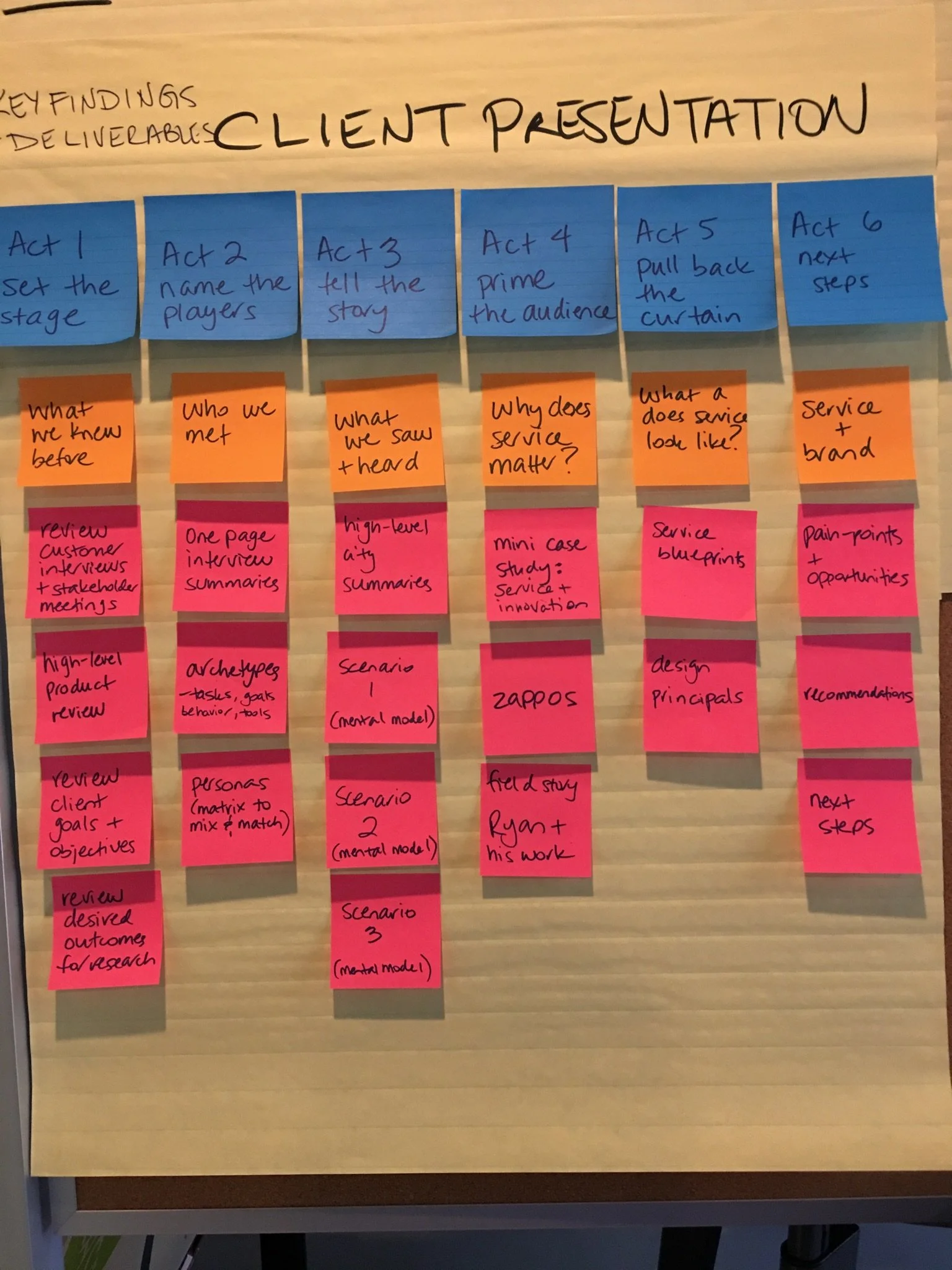
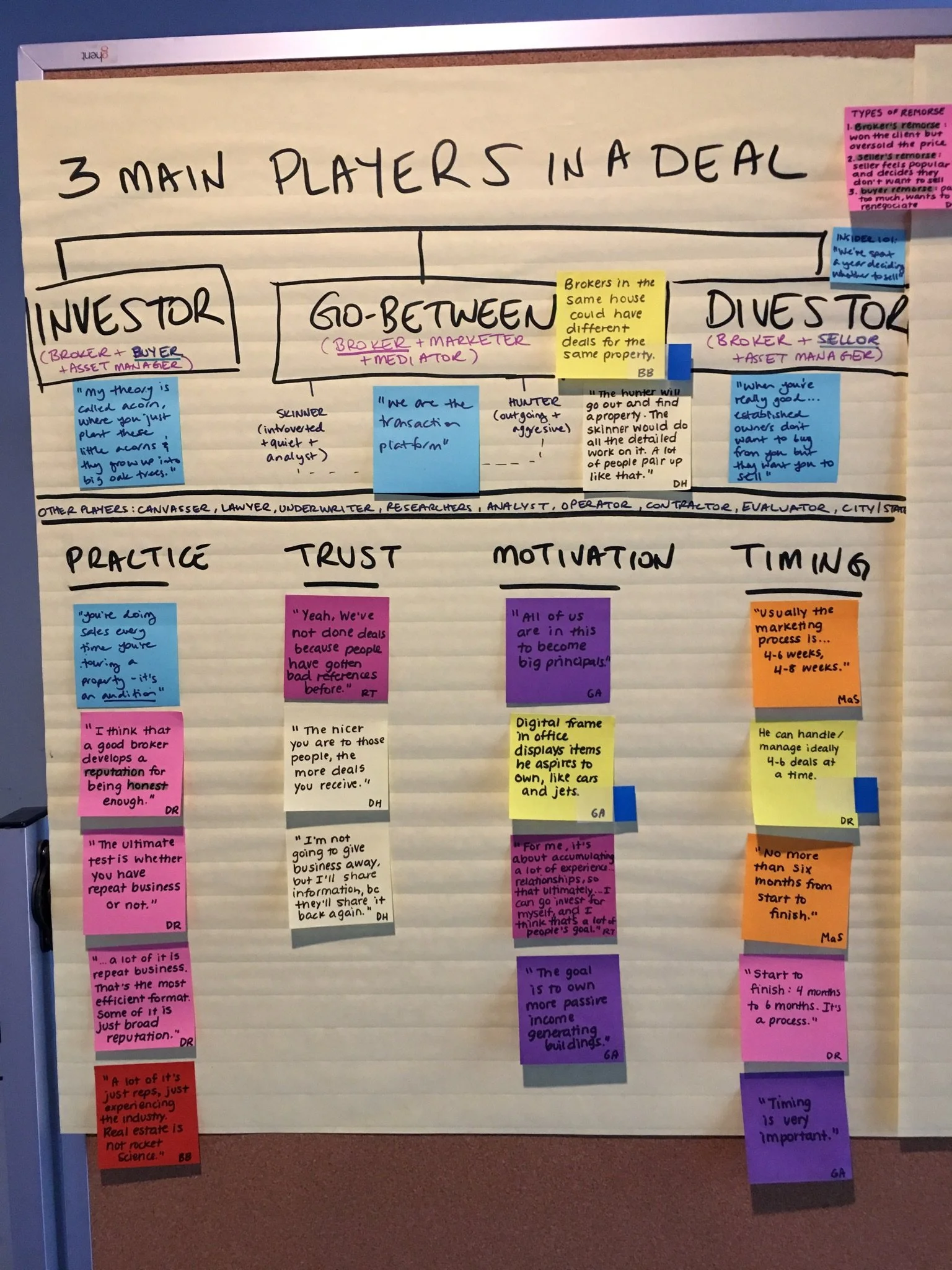
To understand commercial real estate as it is actually practiced, we prioritized in-context, field-based qualitative research over abstract or survey-driven methods.
Methods included:
In-person interviews with 4–6 commercial real estate brokers and subject-matter experts in each city (NYC, LA, Dallas)
Interviews conducted at brokers’ places of business, allowing observation of real tools, artifacts, and workflows
Process walkthroughs of recent and active deals
Discussion of relationship management, negotiation tactics, and informal coordination practices
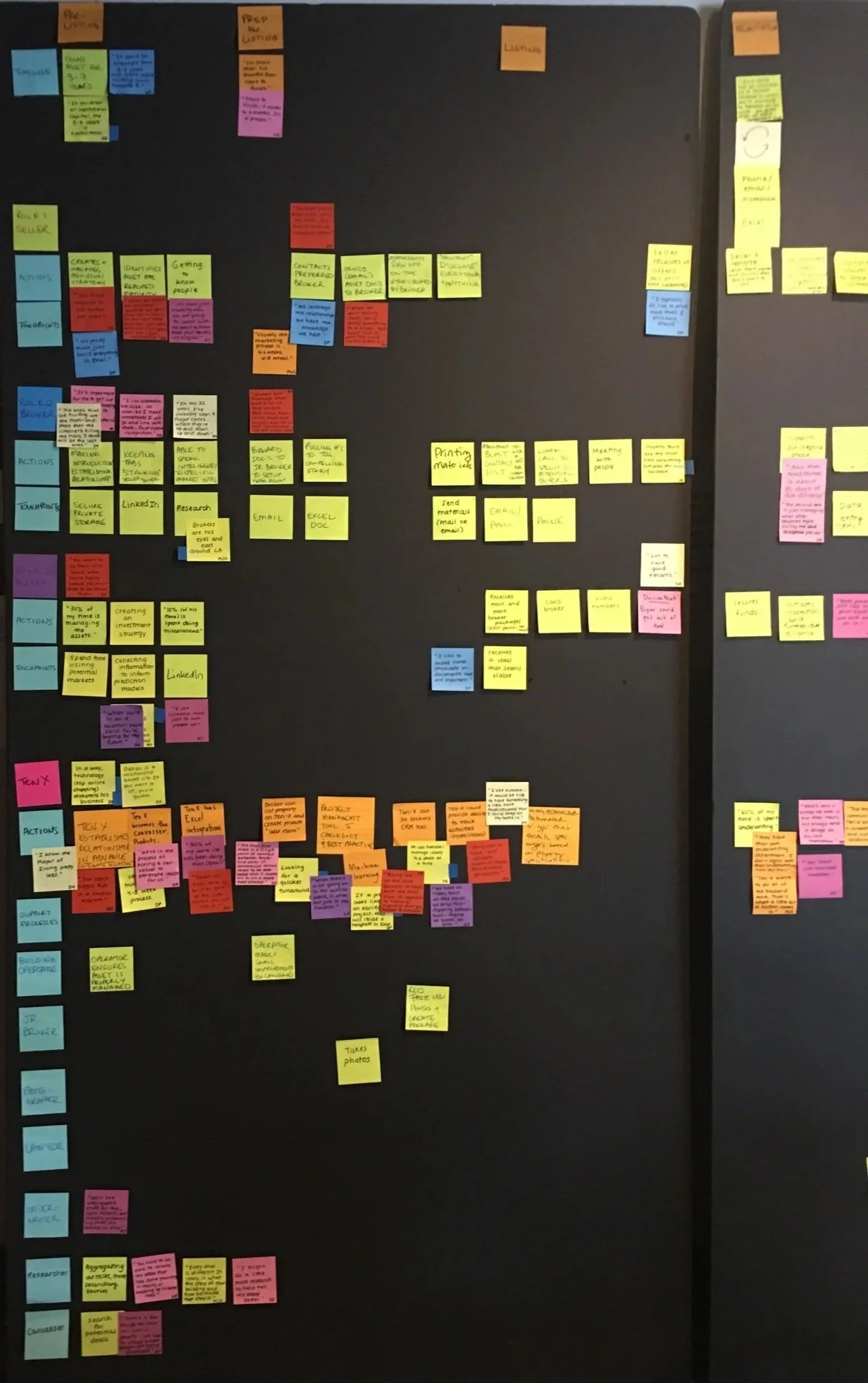
Mapping of the full transaction lifecycle from sourcing and listing through negotiation, closing, and post-deal follow-up
This approach surfaced not just what brokers do, but why they do it that way—and what they would (and would not) trust a digital platform to handle.
Key Insights
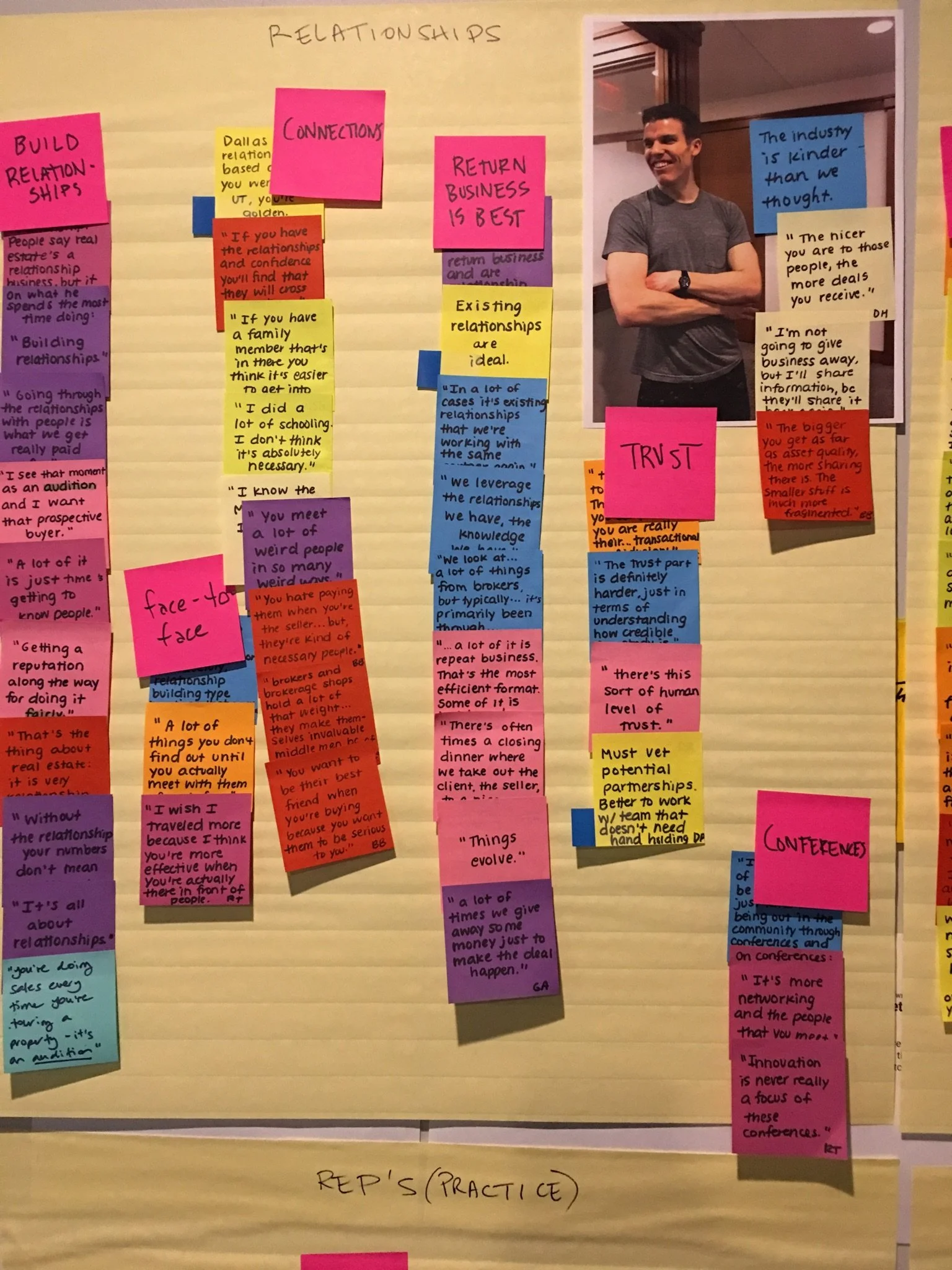
Across markets, several consistent themes emerged:
Commercial real estate is deeply relationship-driven. Deals hinge on trust, reputation, and informal signaling that rarely appears in formal systems.
The “art of the deal” resists rigid workflows. Brokers value flexibility and discretion; overly prescriptive tools are seen as liabilities rather than assets.
Information is fragmented and manually coordinated. Critical deal details live across emails, spreadsheets, PDFs, phone calls, and personal notes.
Digital tools are tolerated when they reduce friction, not control behavior. Practitioners were open to platforms that support coordination, documentation, and visibility—so long as they don’t replace judgment or negotiation.
The transaction lifecycle is end-to-end, but support is not. Existing tools often optimize isolated steps, leaving brokers to bridge gaps manually.
Outcomes & Impact
The research reframed how Ten-X thought about its role in the commercial real estate ecosystem—from a transactional platform to a relationship-aware, lifecycle-supporting service.
The engagement:
Established a shared understanding of broker realities across markets
Identified clear opportunity areas for online services that support, rather than disrupt, deal-making practices
Provided a research-grounded foundation for future product and experience strategy decisions
Most importantly, it helped Ten-X anchor innovation efforts in how work actually gets done, not how it is assumed to work.