Product AlignmentHow Diagnostic Groundwork Led to a 5-Day Decision Sprint
Cision · Media Intelligence / Marketing Technology · 2024
| 75,000+ clients across 24 countries | 3-months of diagnostic groundwork → 5-day sprint → department-wide north star | Fragmented regional analyst workflows unified under a single operational standard | Three-sided impact: customers, internal analysts, and Cision's competitive position |
Overview
Role: Research Director — Human Factors & Systems Orchestration
Organization: Cision (Media Insights)
Engagement Type: Diagnostic Research, Platform Strategy, AI Workflow Governance, Operating Model Design, Facilitated Alignment Sprint
Audience: Internal — Media Insights product, engineering, CX, and operations teams
Focus: Data methodology standardization, AI output trust calibration, cross-functional alignment, adoption architecture, platform integration strategy
Tools: MIRO, Figma, Dovetail, Zoom, Keynote, Microsoft Excel, SharePoint.
My Role
I led the full engagement with one direct report — from the initial diagnostic research through the facilitated sprint and into the post-sprint governance work. I was responsible for designing the research approach, producing the strategic artifacts, facilitating the sprint, and ensuring the outputs were validated with senior leadership and translated into organizational structures that would outlast the engagement.
This was not a screen or UI engagement. The work was system-level: defining how a globally distributed team would align on data methodology, workflow standards, and platform integration strategy so that an AI-powered media intelligence platform could produce outputs that clients and internal teams could trust and act on.
The sprint did not succeed because of what happened over the next five days. It succeeded because of the months of diagnostic work that made disagreement in the room impossible.


The Context
The Surface Problem Was Inconsistent Reporting.
The Real Problem Was Everything Upstream.
Cision operates one of the largest media intelligence platforms in the world — serving 75,000+ clients across 24 countries through a suite of AI-powered tools, including Brandwatch, PR Newswire, and the Cision Communications Cloud. The platform ingests, classifies, and analyzes vast volumes of media data to help communications and marketing professionals understand brand reputation, campaign performance, and media coverage.
The surface problem was inconsistent reporting outputs across regions. Clients in different markets were receiving fundamentally different experiences from the same platform. But the diagnostic work revealed something more significant beneath the surface: Cision had three interconnected platform capabilities — Insights, Distribution, and Connect — that were operating in silos when they needed to be integrated. And the analysts powering the service were working in conditions that guaranteed inconsistency regardless of what the platform did.
The strategic question that emerged was this:
"If we integrate Insights, Distribution, and Connect, could we enable clients to track their communications strategy throughout the entire lifecycle — and eventually deliver automated, intelligent strategy recommendations from behavioral data?"
That is an agentic workflow design problem. But it could not be answered — and certainly could not be built toward — until the organization had a shared understanding of what was broken, why it was broken, and what a unified operational standard would look like.
That shared understanding had to be built before anyone was put in a room to make decisions. That was the purpose of the groundwork.
The groundwork combined five methods:
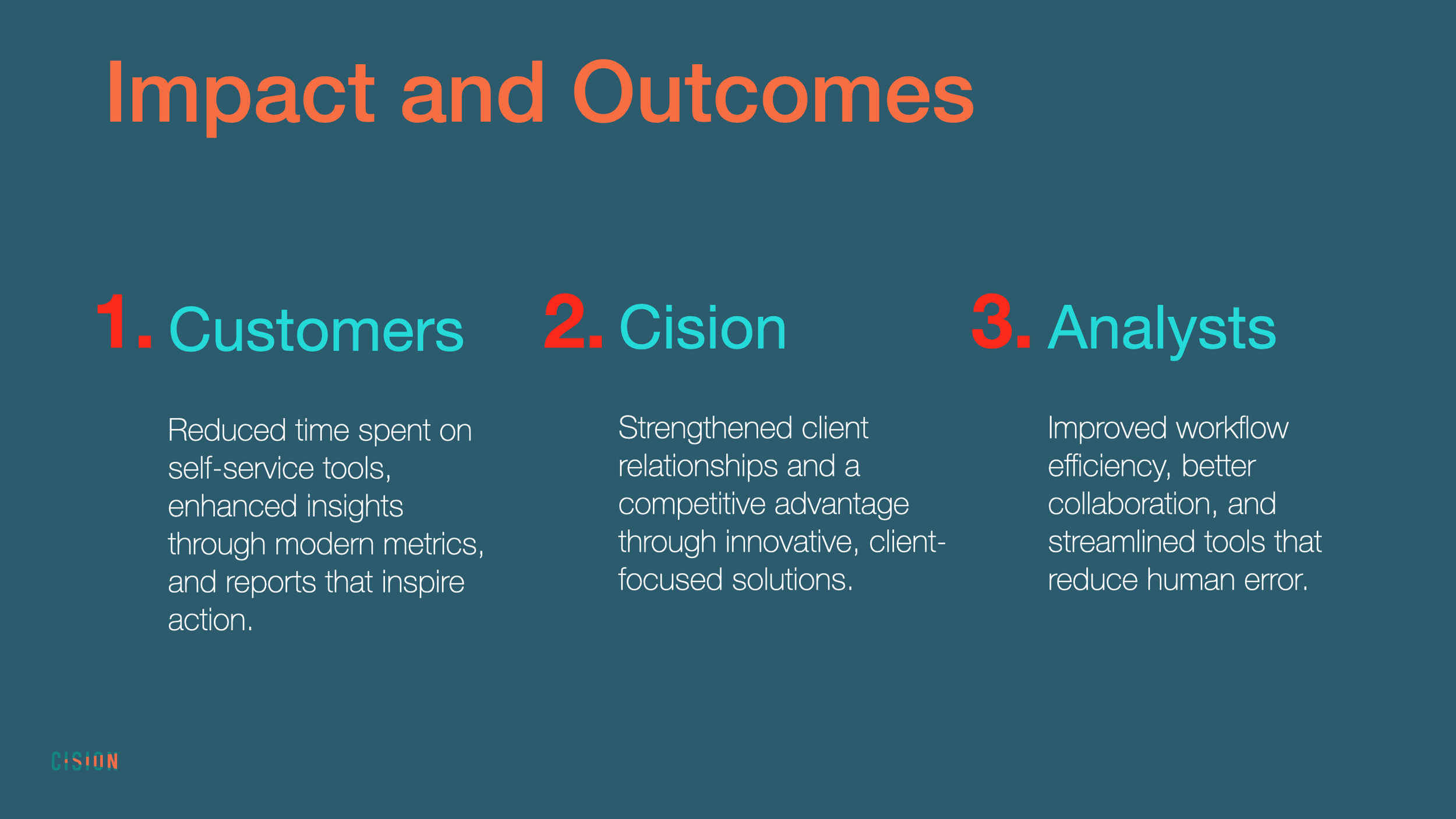
Pain Point Analysis Mapped recurring challenges in reporting, collaboration, and tool usage across regions — focused on identifying where inconsistency originated in the workflow rather than where it surfaced in the output.
Interviews and Surveys Conducted with both internal analysts and external clients across regions to capture qualitative insight into how the platform was actually being used versus how it was designed to function.
Process Mapping Workflows, systems, and communication touchpoints mapped end-to-end — identifying inefficiencies, bottlenecks, and specific opportunities where AI-assisted automation could eliminate manual effort.
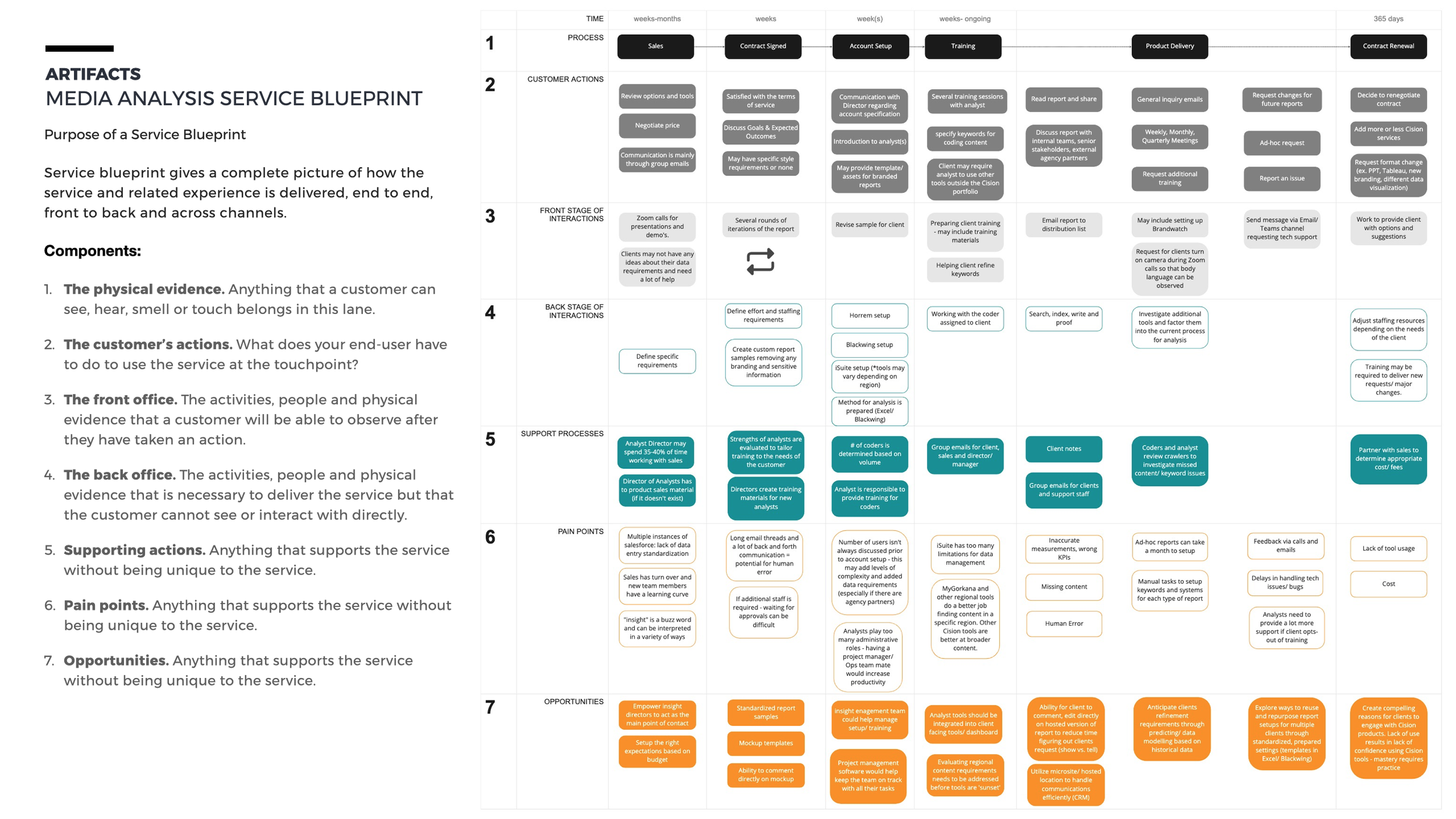
Service Blueprinting End-to-end visualization of the full 365-day service delivery lifecycle from Sales through Contract Renewal, highlighting where internal team operations, tools, and client-facing interactions connected — and where they broke down.
Secondary Research Review of existing tools, prior improvement requests, and benchmarking against industry standards to identify patterns in how the organization had previously attempted and failed to address these problems.
The Groundwork
Building the Evidence Base That Would Make Alignment Possible
Over three months preceding the sprint, I simultaneously designed and executed a multi-method diagnostic across both sides of the service — internal analyst operations and external client experience. The goal was not to produce a research report. The goal was to build an evidence base so thorough and specific that, when the sprint arrived, participants would have no defensible basis for disagreeing about what the problems were.
In a globally distributed organization with entrenched regional practices, alignment fails when it is attempted through opinion. It succeeds when it is attempted through shared evidence that no one can credibly dispute.
What the Groundwork Found
The Problem Was Not the Platform. It Was the Methodology and Governance Upstream
Across regions, analysts — the human operators powering the media intelligence service — were working in conditions that guaranteed inconsistent outputs:
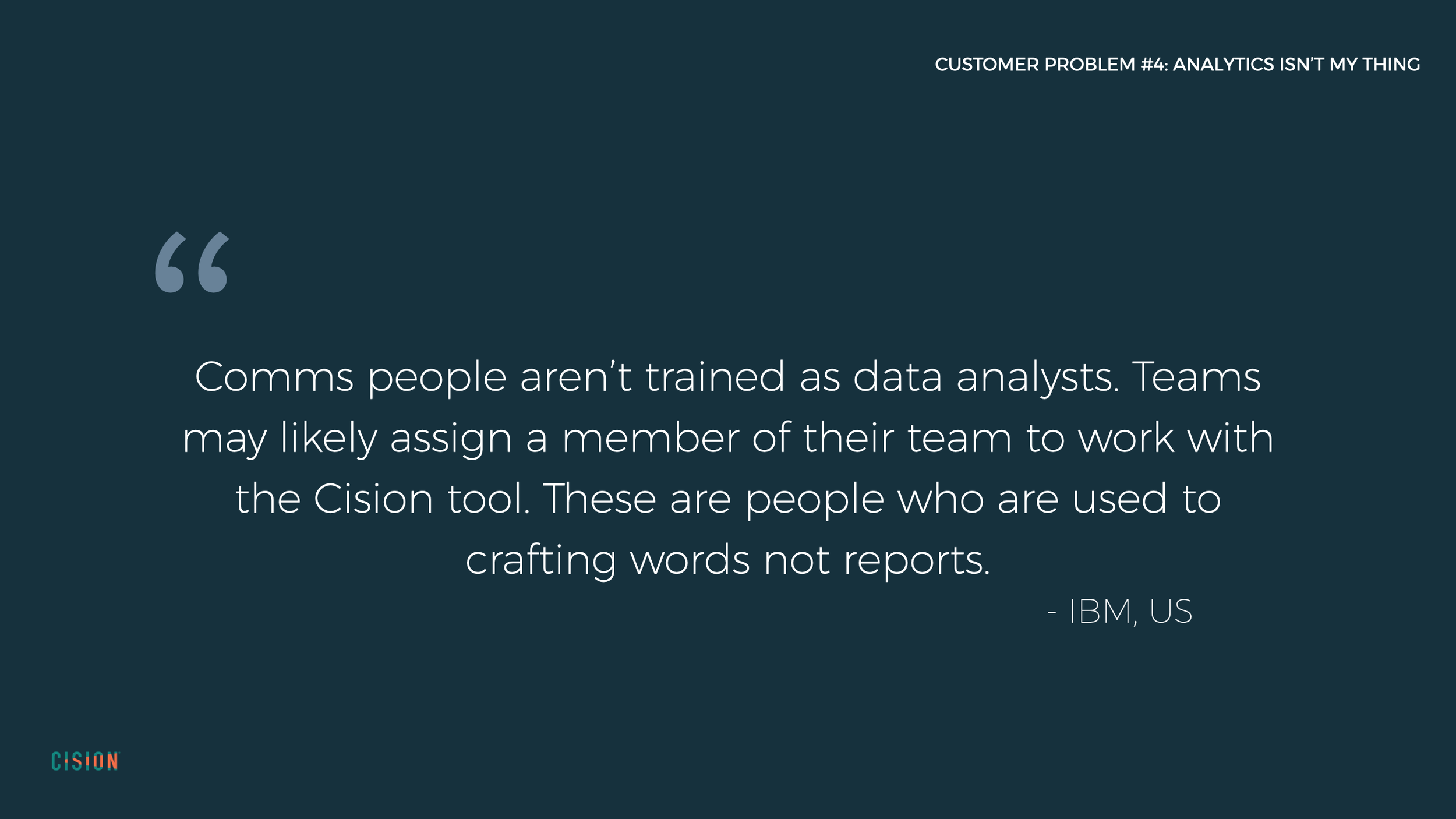
Analysts used Excel as their primary analysis tool, with no validation checks and no standardization. Human error was structurally embedded in the process.
Collaboration ran entirely through email and phone calls. There was no shared workflow tooling, no visibility across teams or regions, and no mechanism for institutional knowledge to transfer. Every analyst was effectively operating in isolation.
Training was inconsistent and limited across regions. Analyst capability varied significantly across the global team. Different regions had developed their own classification and coding methods independently, with no shared standard and no process for reconciling divergence.
No unified taxonomy or output standard existed. Reports produced in one region looked and read differently from reports produced in another — from fonts and layouts to the metrics selected and the analytical frameworks applied.
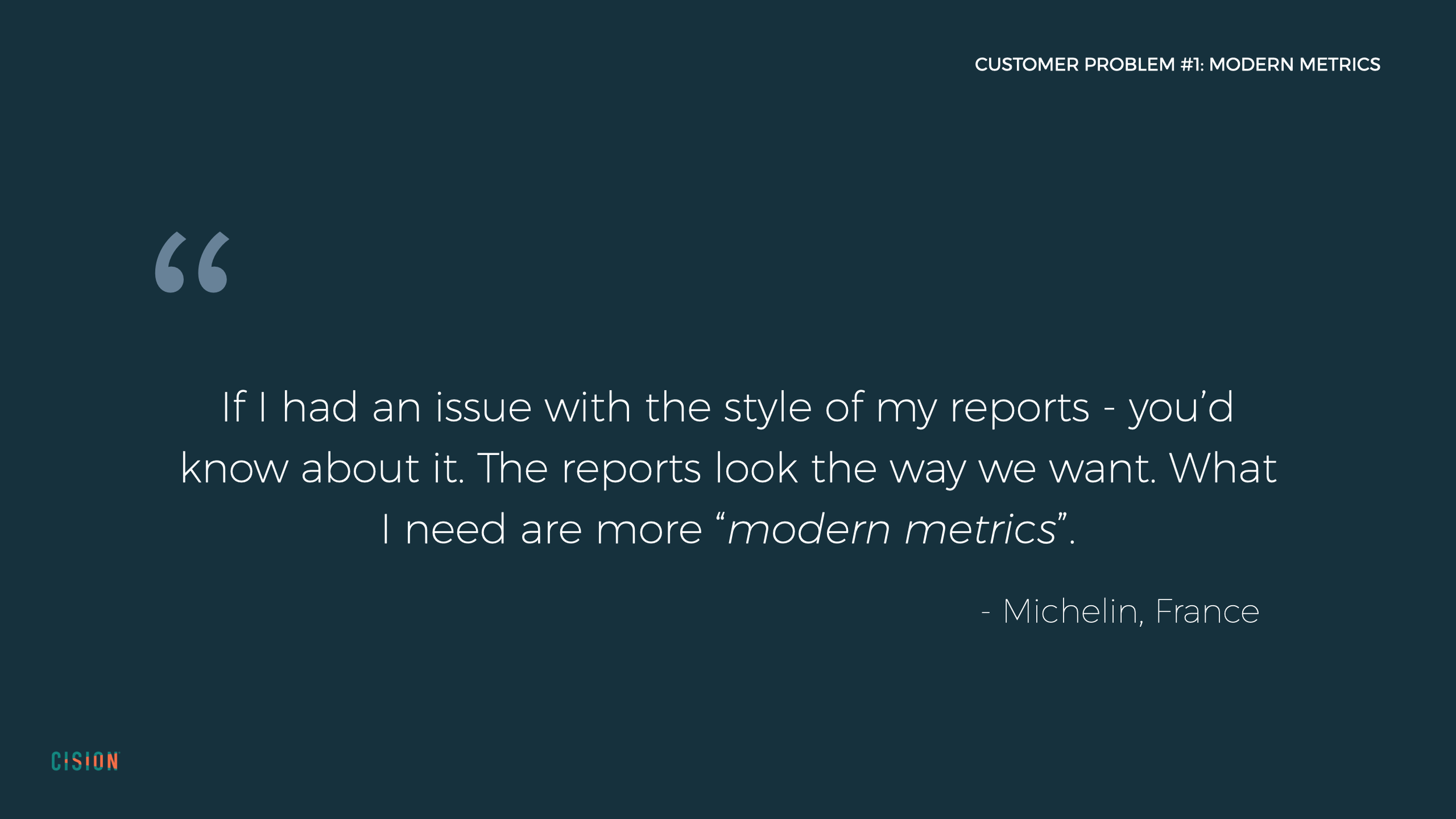
Clients needed something the current output model couldn't deliver. Research found that clients wanted actionable, data-driven insights — KPIs tied to reputation and strategic impact rather than raw performance metrics. They wanted reports that highlighted patterns and told a clear story. They wanted Cision to function as a strategic partner rather than a reporting vendor.
These findings were documented, evidenced, and structured before the sprint. When participants arrived, the evidence was already on the wall. The groundwork had done the work of building the shared reality that alignment requires.
The core diagnostic insight that organized everything:
"This is not a product problem. It is a data methodology and alignment problem — and until the global team agrees on how analysis is performed, no future investment in automation or platform development will produce consistent, trustworthy output."
The Groundwork Artifacts
Four systems artifacts were produced during the diagnostic phase, each designed to function as both a research output and a sprint input:
The service blueprint mapped the full delivery lifecycle across seven layers: customer actions, front-stage interactions, back-stage interactions, support processes, pain points, and opportunities at every stage from Sales through Contract Renewal.
It made visible what the organization knew intuitively but had never seen in a single view: the platform was performing correctly on the data it received. The data itself was the problem, and the data problem was a human workflow problem that originated at the very first client interaction and compounded across every subsequent stage.
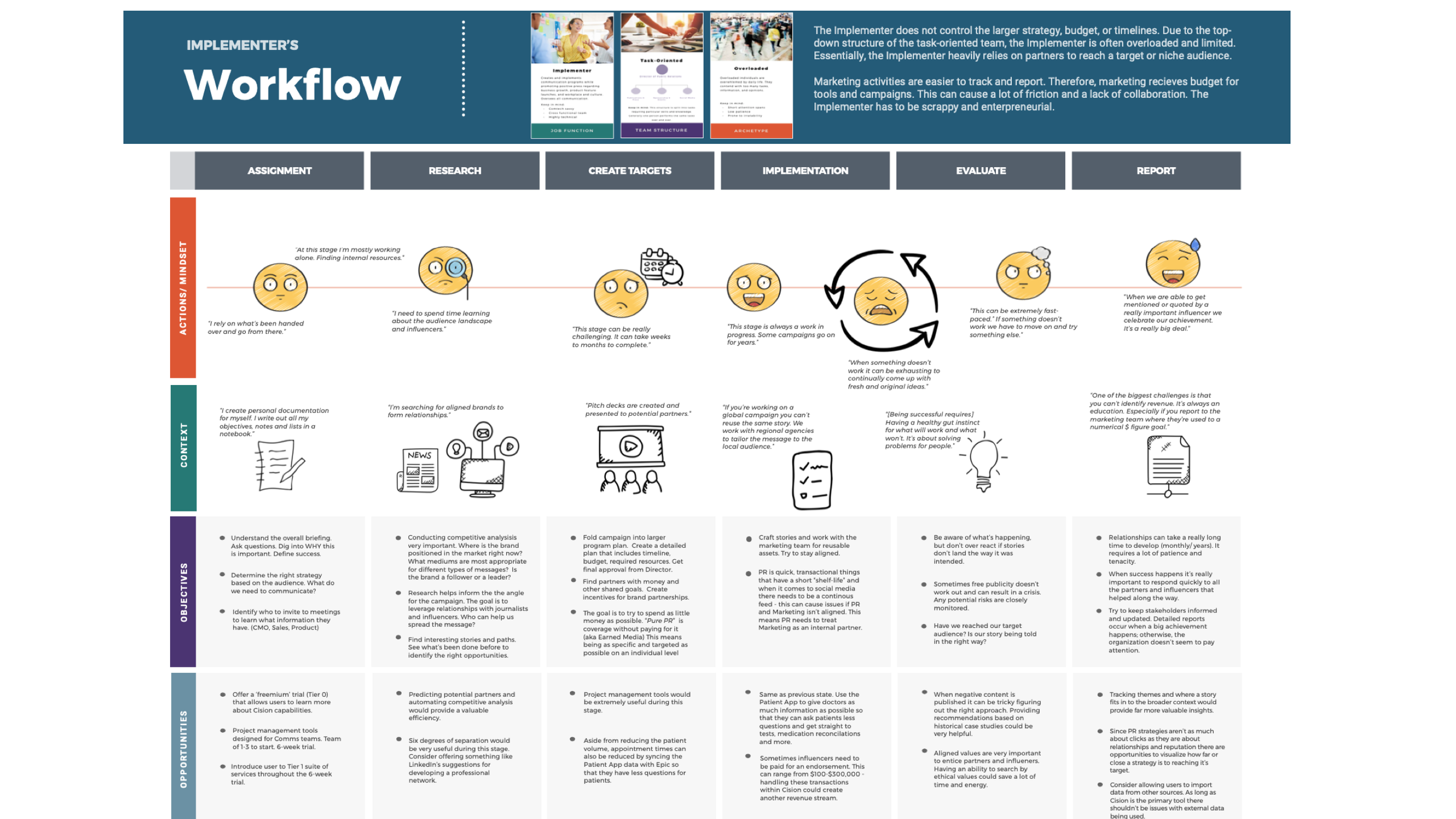
The operator workflow analysis traced how the primary internal operator — the Implementer — actually moved through their work across six stages: Assignment, Research, Create Targets, Implementation, Evaluate, Report.
Key findings: operators worked largely alone at the assignment stage with no structured discovery support; research required building competitive landscape understanding manually with no platform assistance; global campaigns required regional customization that no single workflow accommodated; and the evaluation stage produced operator exhaustion rather than learning, because the system had no mechanism for surfacing what had worked before.
These were not workflow inconveniences. They were the specific points where human process fragmentation was creating the noise that made platform output inconsistent.
The Role Personas and Behavioral Adoption Archetypes
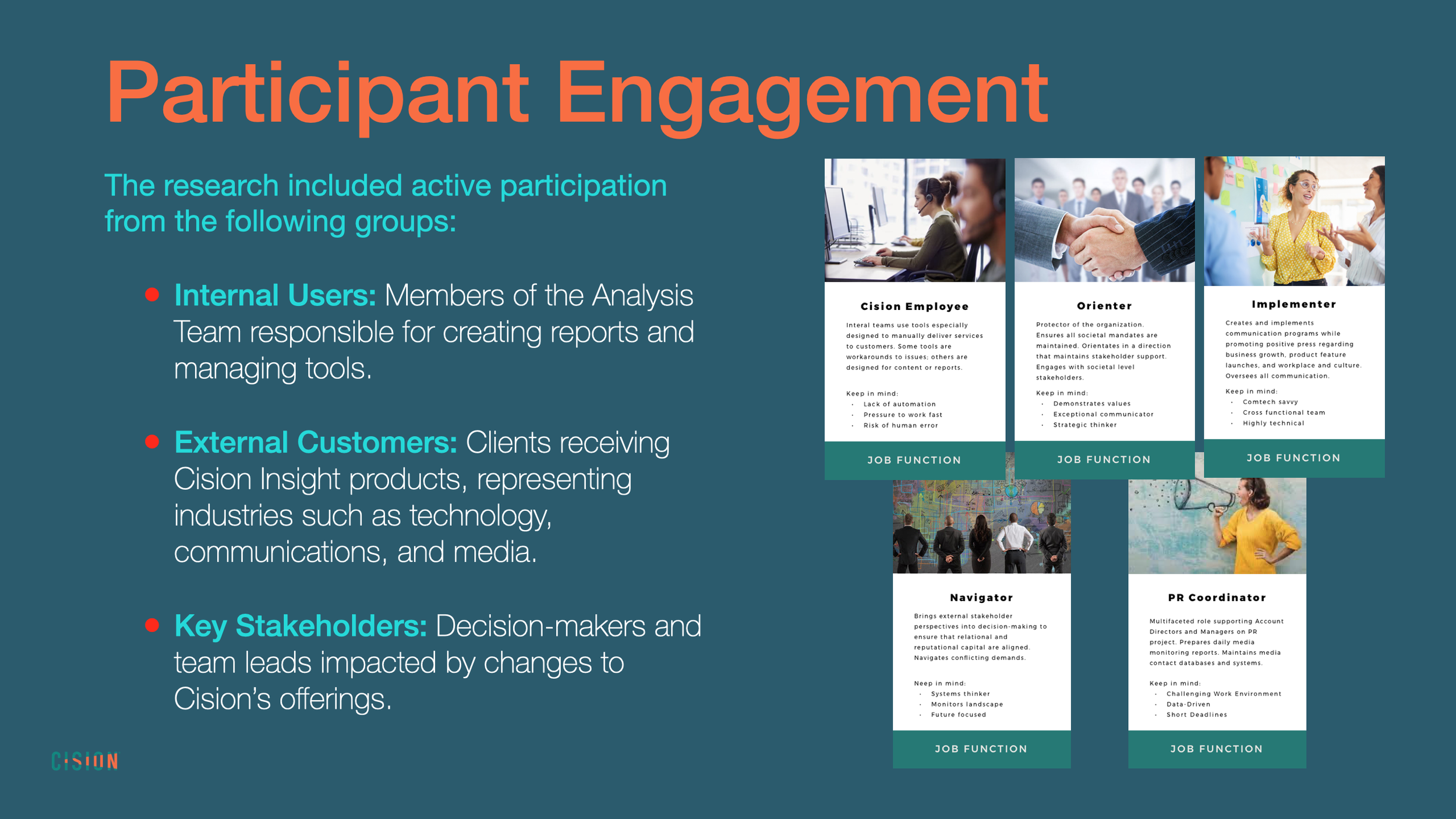
The role persona work mapped eight operator types across the Cision ecosystem — Cision Employee, Editor, PR Coordinator, Orienter, Corporate Communications, Implementer, Catalyst, Navigator — establishing who was operating the system, what they needed from it, and what their relationship to change looked like.
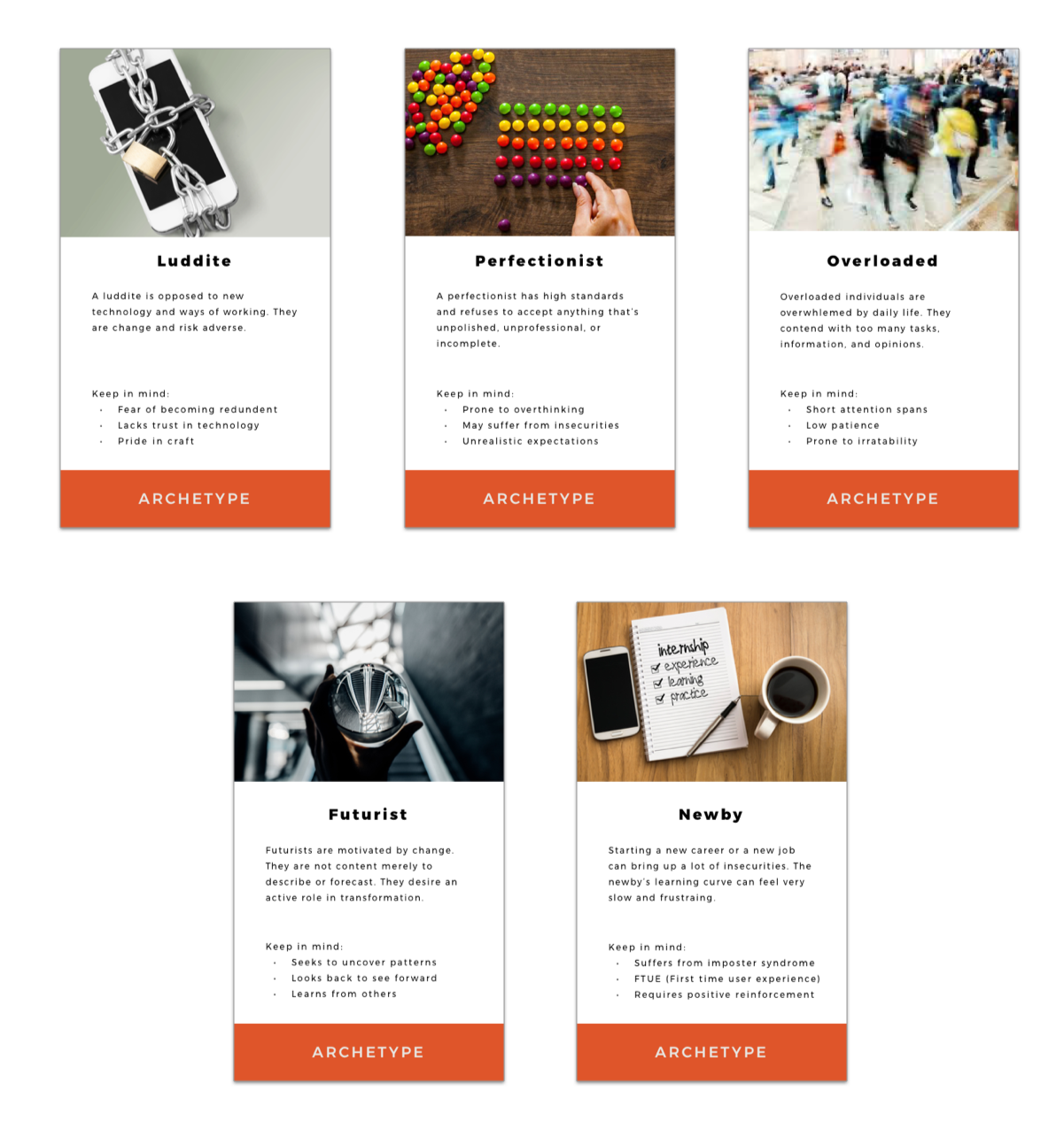
The behavioral adoption archetypes — Luddite, Perfectionist, Overloaded, Futurist, Newby — went deeper: a framework for designing change management and training strategies around how different operators actually respond to new workflows and tools. In a globally distributed team undergoing acquisition integration, adoption failure is the most common cause of transformation initiatives collapsing. These archetypes gave the organization a structured model for anticipating and addressing resistance before it materialized.
The VoC Request Process
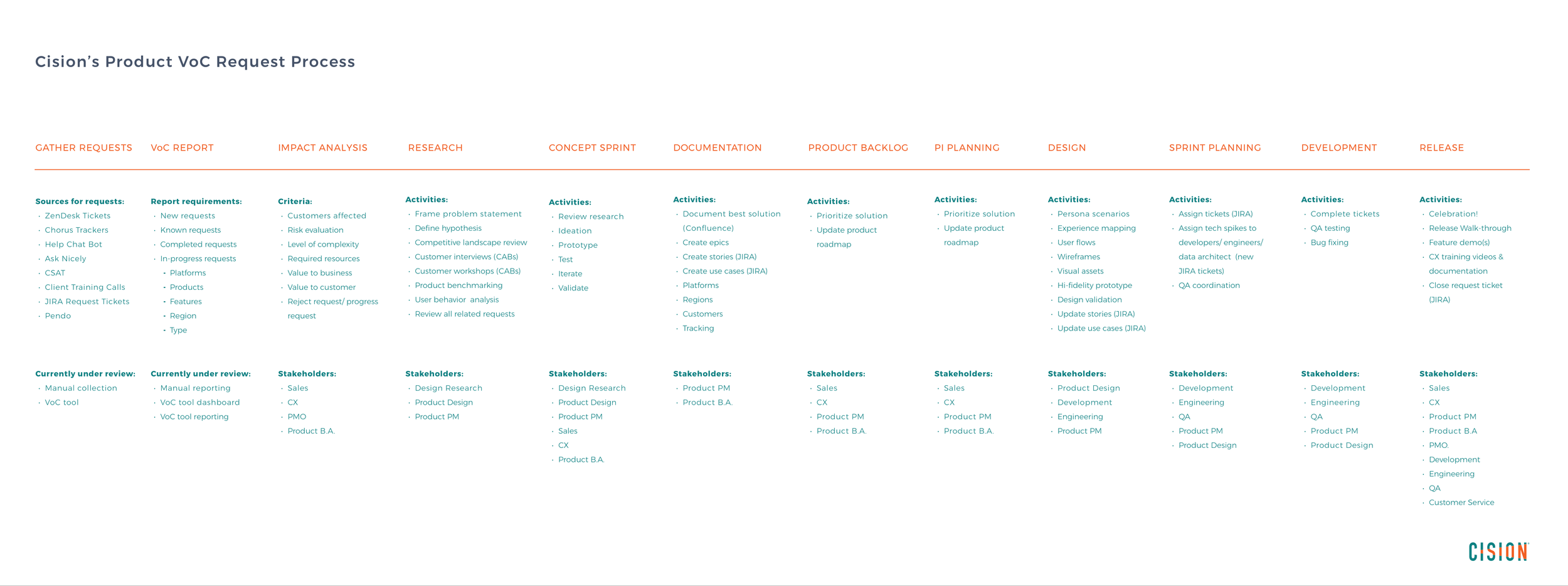
A critical gap the diagnostic surfaced was the absence of a reliable system to capture, triage, and act on product feedback from a 75,000+ client base. Product decisions were being made without a coherent signal from the field.
I designed Cision's Product Voice of Customer Request Process — a 12-stage workflow governing how feedback is entered into the system and moves through to product action: Gather Requests → VoC Report → Impact Analysis → Research → Concept Sprint → Documentation → Product Backlog → PI Planning → Design → Sprint Planning → Development → Release.
This was not a feedback form. It was a signal aggregation and routing architecture — ensuring client and operator intelligence was captured consistently, evaluated against shared criteria, and translated into product decisions with cross-functional ownership at every stage.
The Sprint
Five Days to Global Alignment
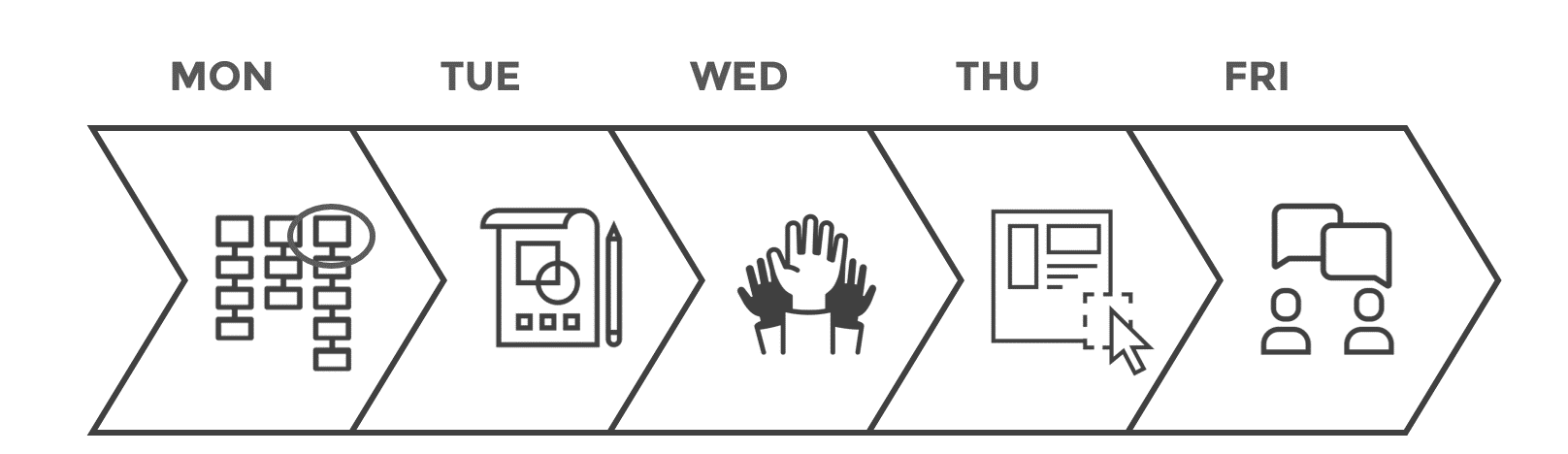
By the time the sprint arrived, the groundwork had already answered the diagnostic questions. The sprint was not a research exercise. It was an alignment exercise — a structured five-day process designed to bring a globally distributed leadership team into the same room, confront them with the shared evidence the diagnostic had built, and force a decision about where the organization was going.
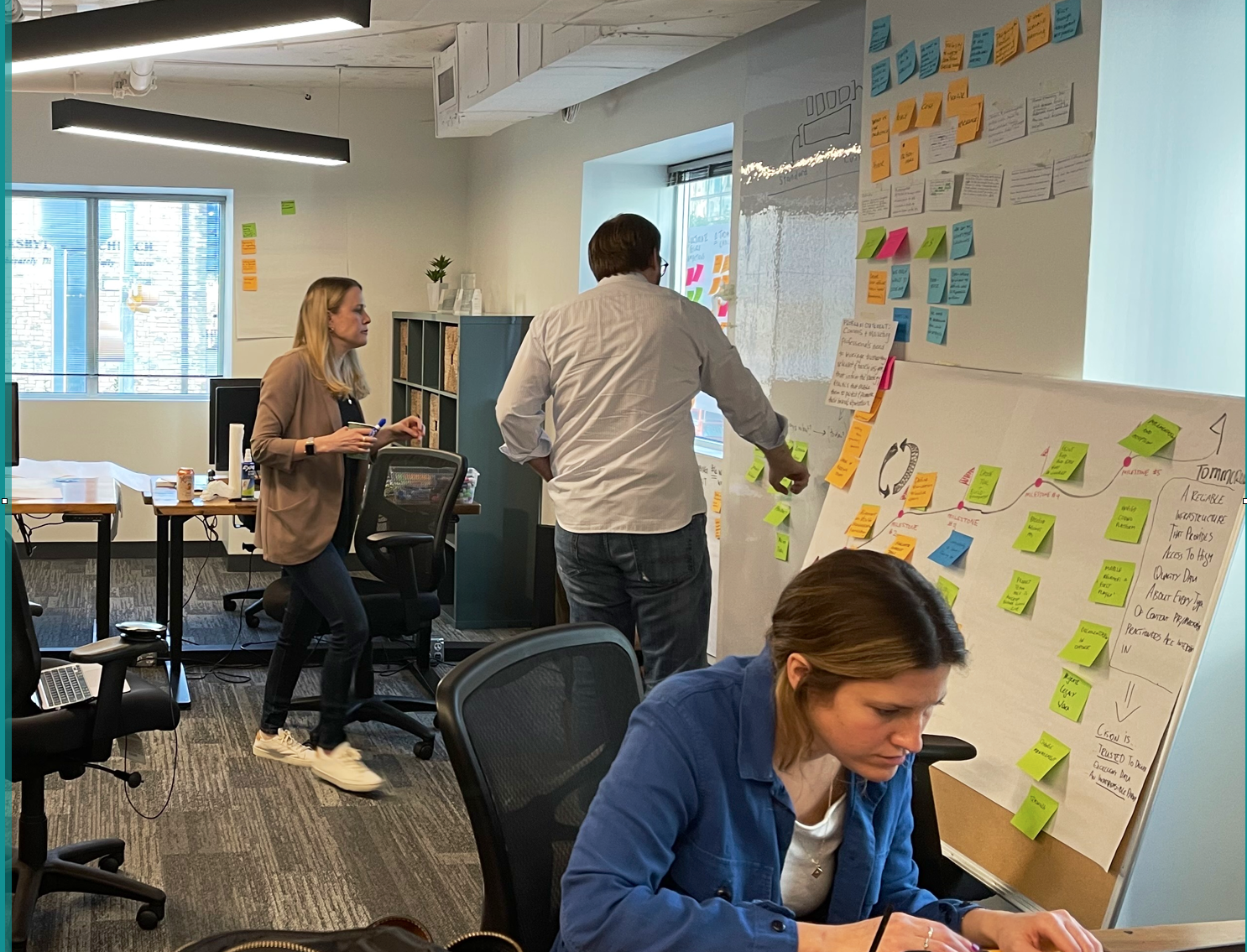
I led the sprint with one collaborator. The participants included stakeholders from product, engineering, CX, and operations. The artifacts from the diagnostic phase — the service blueprint, the workflow maps, the archetypes, the VoC process — were the inputs. The north star was the output, but alignment was the actual deliverable. The Mountain of Tomorrow worked as an alignment artifact because the diagnostic had documented the current state so accurately and completely that disagreement on the problem was no longer possible. What remained was a decision about direction — and that is a tractable problem when everyone in the room is looking at the same evidence.
The sprint worked because the groundwork had made disagreement on the problem impossible. What remained was disagreement on the solution — and that is a tractable problem when the evidence base is already shared.
The Sprint Output: The Mountain of Tomorrow
The primary output of the sprint was a strategic vision and milestone architecture — internally named "The Mountain of Tomorrow" — that gave the global media insights team a shared destination and a sequenced path to reach it.
The vision statement: Cision is trusted to deliver excellent data and perceived as an indispensable partner.
What it defined across six dimensions:
1. Ultimate Future Ambitions Trusted, reliable, indispensable, high quality, flexible — the qualities the platform needed to embody to be genuinely differentiated in the market.
2. Today's Challenges The failure states the organization was currently operating in, now formally acknowledged and shared: not intuitive, long onboarding, inflexible, disconnected front and back end, too manual, no unified point of view, multiple coding methods, inconsistent output, lack of trust. These were no longer regional opinions. They were organizational facts.
3. Project Goals Reduce manual tasks for dedicated client teams. Improve data visualization models. Increase efficiencies and reduce overhead. Integrate into a single source of truth for data. Establish the operational foundation that would make future platform development — including any automation investments — reliable and consistent.
4. Milestones A sequenced path from current state to vision: alignment on point of view → define foundation to build upon → choose tool and build foundation → front-end and back-end decoupling → implementation and adoption → continuous improvement.
5. Climbing Equipment The organizational capabilities required before the milestones could be reached: unified coding platform, advanced analytics hire, dedicated data architect, competitive analysis capability, audit of all data dictionaries, NLP resources, data governance structure, change management strategy.
6. Ways of Working Data governance, data functionality, breakout sessions, change management strategy, ability to pivot and adapt — the behavioral and operational infrastructure that would sustain the north star over time.

Platform Integration Strategy: The Communications Lifecycle Vision
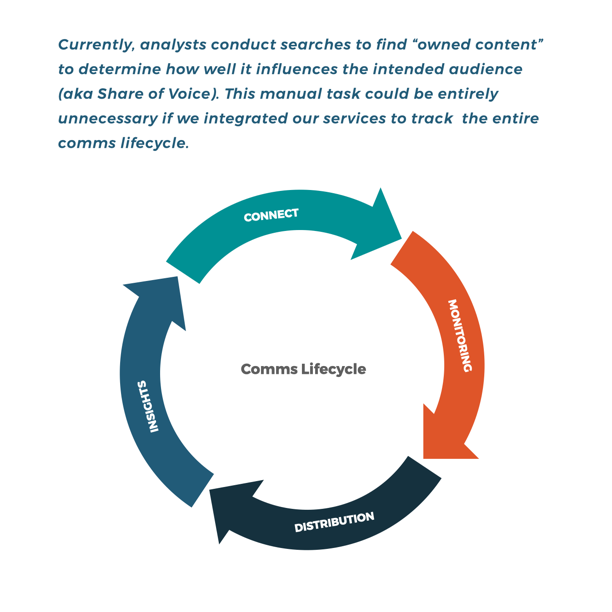
A critical strategic output of the sprint was alignment on the platform integration opportunity. The research had established that Cision's three core capabilities — Insights, Distribution, and Connect — were directly impacting one another but operating without integration.
Currently, analysts conduct manual searches to find owned content and determine how well it influenced the intended audience — a Share of Voice analysis that was entirely manual and entirely eliminable through platform integration.
The sprint produced alignment on the strategic question: "If we integrate these services, could we enable clients to track their communications strategy throughout the entire lifecycle — and ultimately deliver higher value, more consistent intelligence for insight customers?"
This reframed the product vision from a reporting tool to a connected communications intelligence platform — one capable of observing the full lifecycle and surfacing insights without requiring manual analyst intervention at every step. That vision required the unified data methodology as its prerequisite. Which is why the groundwork had to come first — and why answering the question of the right approach to future development required first understanding and fixing what was broken in the current one.
Validation
The sprint output was not adopted solely on the strength of the five days.
The findings and recommendations were validated through:
Feedback sessions with subject matter experts and senior leadership across the organization
Prototype testing and iterative development of tools and templates proposed in the service recommendations
Benchmarking of success metrics, including reductions in processing time and improvements in customer satisfaction
This validation step was deliberately built into the process design. In a globally distributed organization with entrenched regional practices, a north star that hasn't been stress-tested at the senior leadership level won't survive contact with implementation. The validation process was what converted sprint output into organizational commitment.
Key Takeaway
Alignment is not an output of a meeting. It is the result of building a shared reality that makes disagreement impossible before the meeting begins.
The 5-day sprint succeeded because it was the culmination of months of diagnostic work — not a standalone event. Every artifact produced in the groundwork phase was designed not just to document the problem but to make it undeniable. By the time the sprint arrived, the evidence had already been shared, the failure modes had already been named, and the only remaining work was deciding where to go.
What the alignment made possible was a specific and consequential answer to the question every organization is currently asking: where and how do we introduce AI? That question cannot be answered responsibly in a fragmented organization. When data methodology varies by region, when analysts classify the same content differently depending on where they sit, when there is no shared taxonomy and no governance structure to maintain one, introducing AI into that environment doesn't solve the inconsistency problem. It scales it.
The Mountain of Tomorrow gave Cision's global team a shared answer: AI-assisted workflows belong in the roadmap, but only once the data methodology is unified, the classification standards are consistent, and the governance infrastructure is in place to maintain them. That sequencing decision — methodology first, automation second — is only possible when the organization has a documented, shared, and agreed-upon picture of the current state. Without the alignment artifact, the question of where to introduce AI yields different answers across regions and teams, based on local assumptions rather than shared evidence.
When organizational data methodology is fragmented, inconsistent output is inevitable — regardless of what tools or platforms are layered on top. Fixing the methodology, the governance, and the human workflows that produce the data is the prerequisite for any AI investment to actually work. That work happens before the roadmap. It is the work most organizations skip, which is why most AI implementations in fragmented organizational environments fail to deliver on their promise — not because the model is wrong, but because the data it is working with was never made consistent.
This engagement proved that the foundational work can be done within real constraints, within a reasonable timeline, and with executive buy-in — not by waiting for conditions to be perfect, but by building the shared evidence base that makes alignment feel like fact rather than opinion. And it proved that the answer to "where should we introduce AI?" is only as good as the organization's understanding of where it currently stands.