Product Operating Model Diagnostic & North Star Alignment FrameworkIdentifying the Operational Gaps Limiting Product Adoption in a Scaling Fintech Platform
How might we create a shared operating model that enables Product, Support, and Customer Success teams to deliver new capabilities consistently, improve customer adoption, and sustain trust as the platform scales?
Apiture is a fintech platform serving regional and community banks in a highly regulated environment where product reliability, adoption, and customer trust are critical to business success.
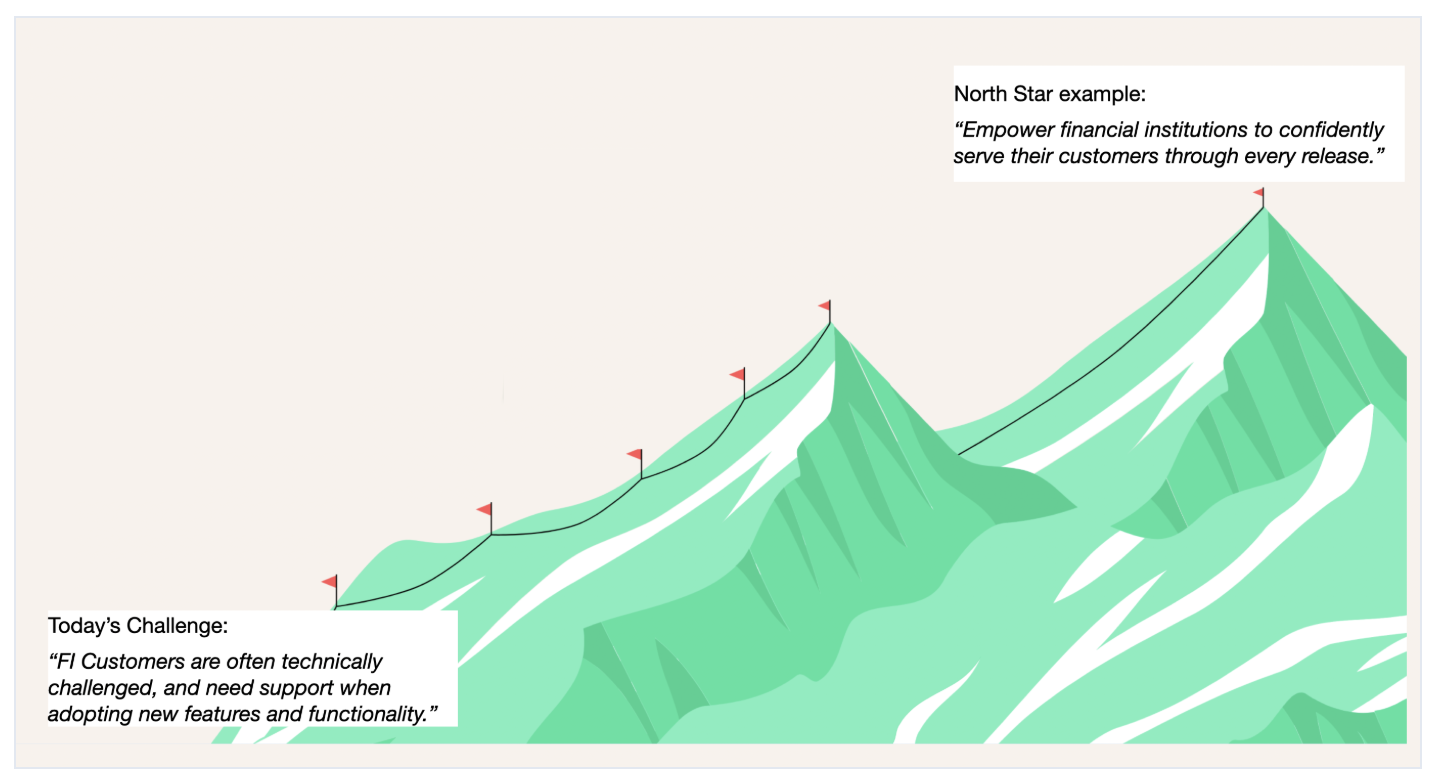
Leadership initially engaged the team to define a Product North Star that could align roadmap decisions and guide future growth. However, Stakeholder Interviews revealed the challenge was not strategic direction—it was operational coordination.
The Challenge
The stated challenge was to create a Product North Star that would align teams around a common vision.
The diagnostic revealed a different problem.
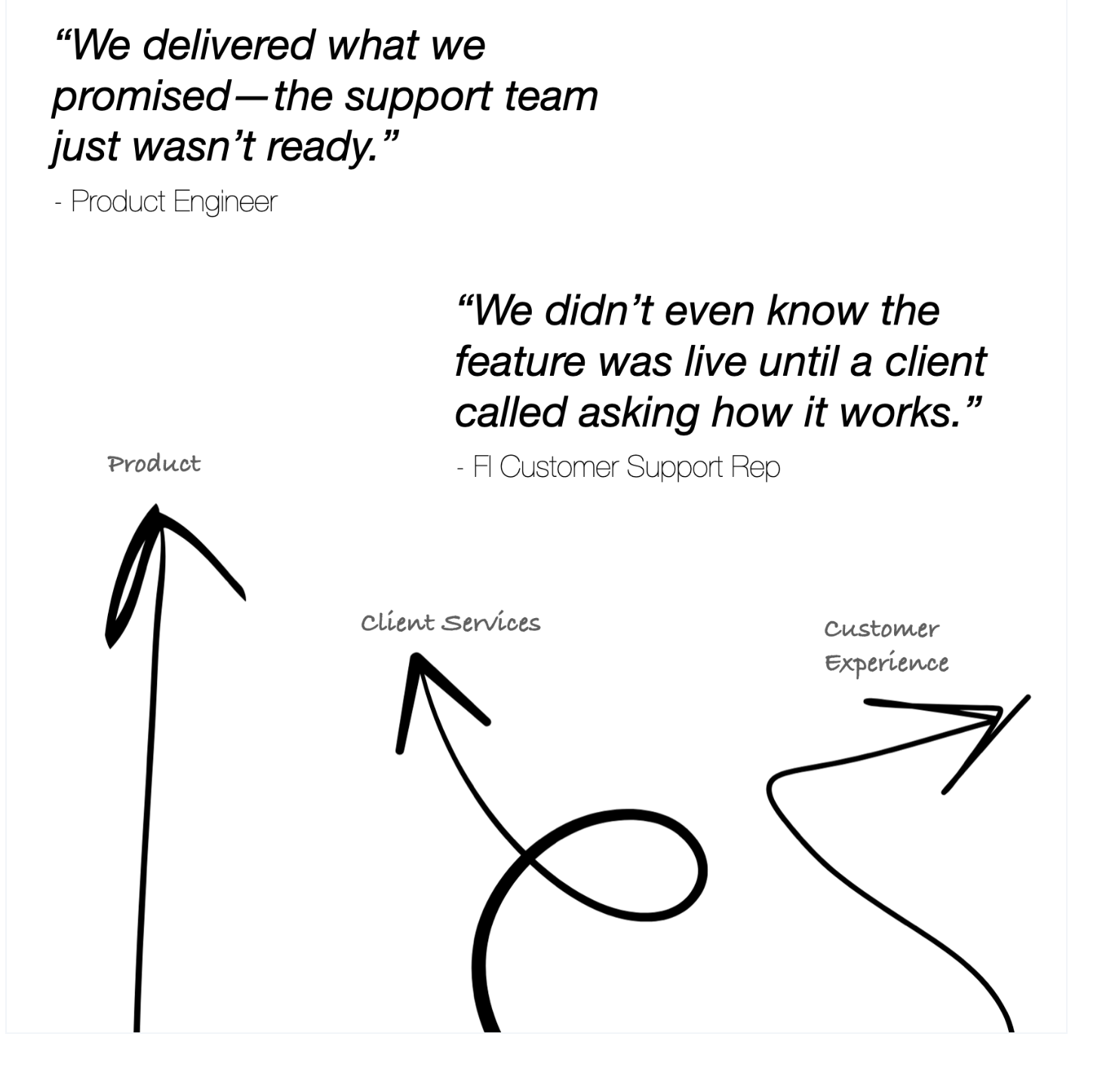
New capabilities were being released successfully from a product development perspective, but adoption, support readiness, customer communication, and feedback integration were not consistently coordinated across teams.
The organization had optimized for shipping features but lacked shared operational mechanisms to ensure those features could be adopted and supported effectively after launch.
Without addressing these systemic gaps, any strategic vision risked being undermined by the day-to-day realities of execution.
Rather than moving directly into vision-setting, I conducted a systems-level diagnostic across Product, Engineering, Support, Customer Success, and Operations.
The goal was to understand whether the organization was structured to successfully deliver, support, and scale new capabilities before defining what future success should look like.
My Role
As Strategy Director, I led the organizational diagnostic, stakeholder research, systems analysis, and cross-functional synthesis effort.
I was responsible for evaluating how Product, Support, Customer Success, and Operations interacted throughout the feature delivery lifecycle and for translating the findings into a shared operating model and a strategic alignment framework.
What I Did
Conducted Cross-Functional Research
Interviewed stakeholders across Product, Engineering, Support, Customer Success, and Operations
Reviewed previous strategic initiatives and product planning artifacts
Assessed operational dependencies across teams
Mapped End-to-End Delivery Systems
Analyzed feature release workflows
Examined customer adoption processes
Identified breakdowns in communication, readiness, and ownership
Diagnosed Systemic Failure Points
Identified recurring patterns including:
No shared definition of "done"
No operational readiness checkpoints before release
No closed-loop feedback mechanism
Misaligned success metrics across teams
Knowledge transfer occurring through informal channels
Developed Strategic Alignment Frameworks
Created operating model recommendations focused on:
Release readiness governance
Cross-functional accountability
Adoption measurement
Customer-impact visibility
Continuous feedback loops
Key Deliverables
Organizational Diagnostic
A systems-level assessment of operational readiness, coordination patterns, and structural barriers to adoption.
Product North Star Framework
A strategic alignment model designed to connect long-term vision with operational execution.
Lifecycle Loop of Done
A cross-functional coordination framework connecting:
Product
Marketing / Customer Communication
Support
Customer Success
Product Feedback
Operating Model Recommendations
Recommendations for:
Shared success metrics
Release governance
Readiness checkpoints
Cross-functional rituals
Adoption measurement practices
Risk Assessment
Documentation of operational risks associated with continued scaling without organizational alignment.
Why This Work Matters
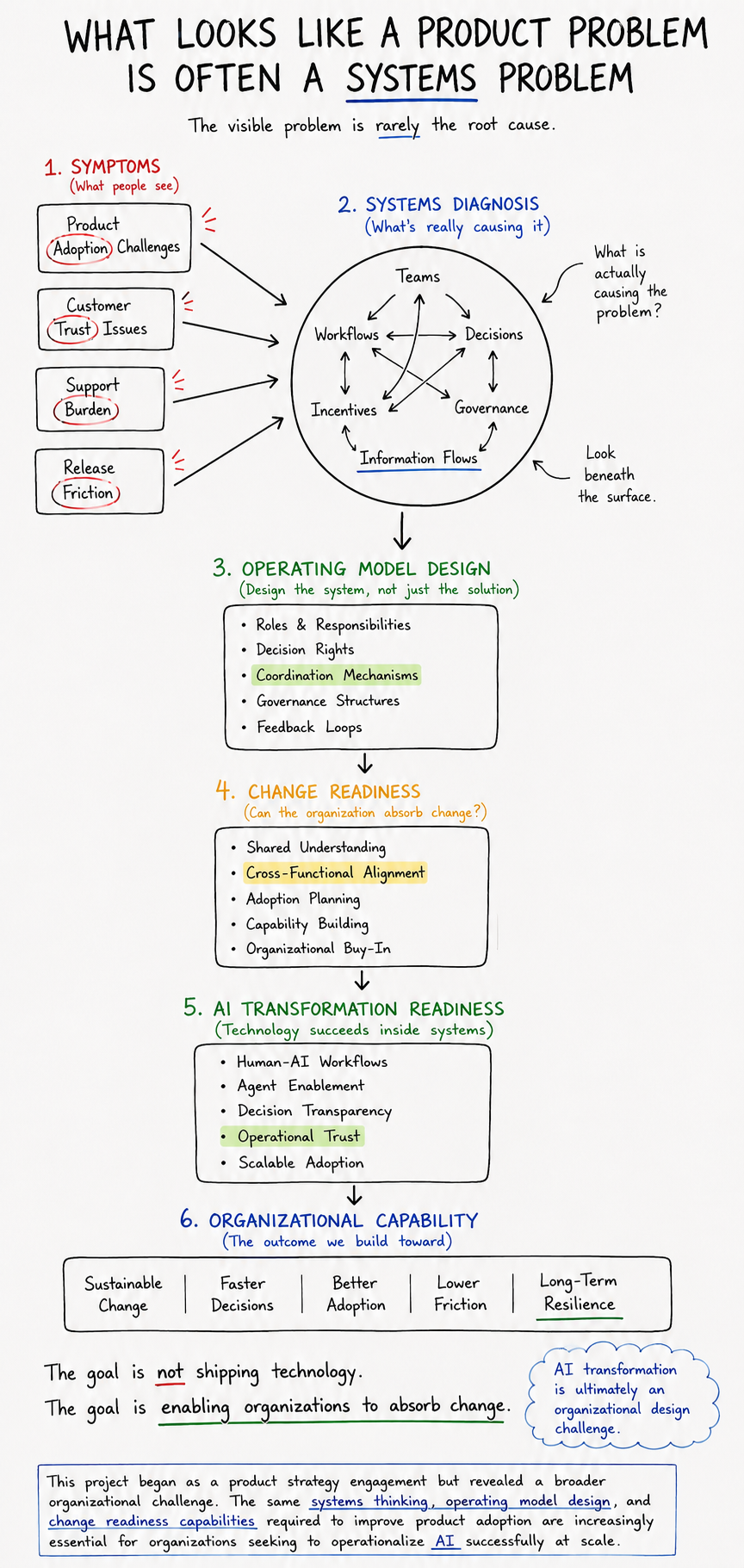
Many organizations assume adoption challenges are product problems.
In reality, adoption is often an operating model problem.
This engagement demonstrated how product success depends on the coordination of multiple teams, workflows, incentives, and decision structures—not simply the quality of the technology itself.
The same pattern appears in AI transformation initiatives today.
Organizations frequently focus on building new capabilities while overlooking the systems required to operationalize them. Without shared governance, readiness mechanisms, accountability structures, and feedback loops, new technologies create additional complexity rather than sustainable value.
This work illustrates how systems thinking, organizational diagnostics, and operating model design can uncover the conditions necessary for successful adoption before making larger investments.
Diagnostic Approach
Rather than moving directly into vision-setting, I took a systems-level diagnostic approach, combining:
One-on-one interviews across Product, Engineering, Support, CX, and Customer Success
Review of historical research and prior strategy work
Mapping of end-to-end product delivery and support workflows
Analysis of how success was measured across teams
This allowed me to evaluate not just what the organization was building, but whether the system was designed to absorb change safely and sustainably.
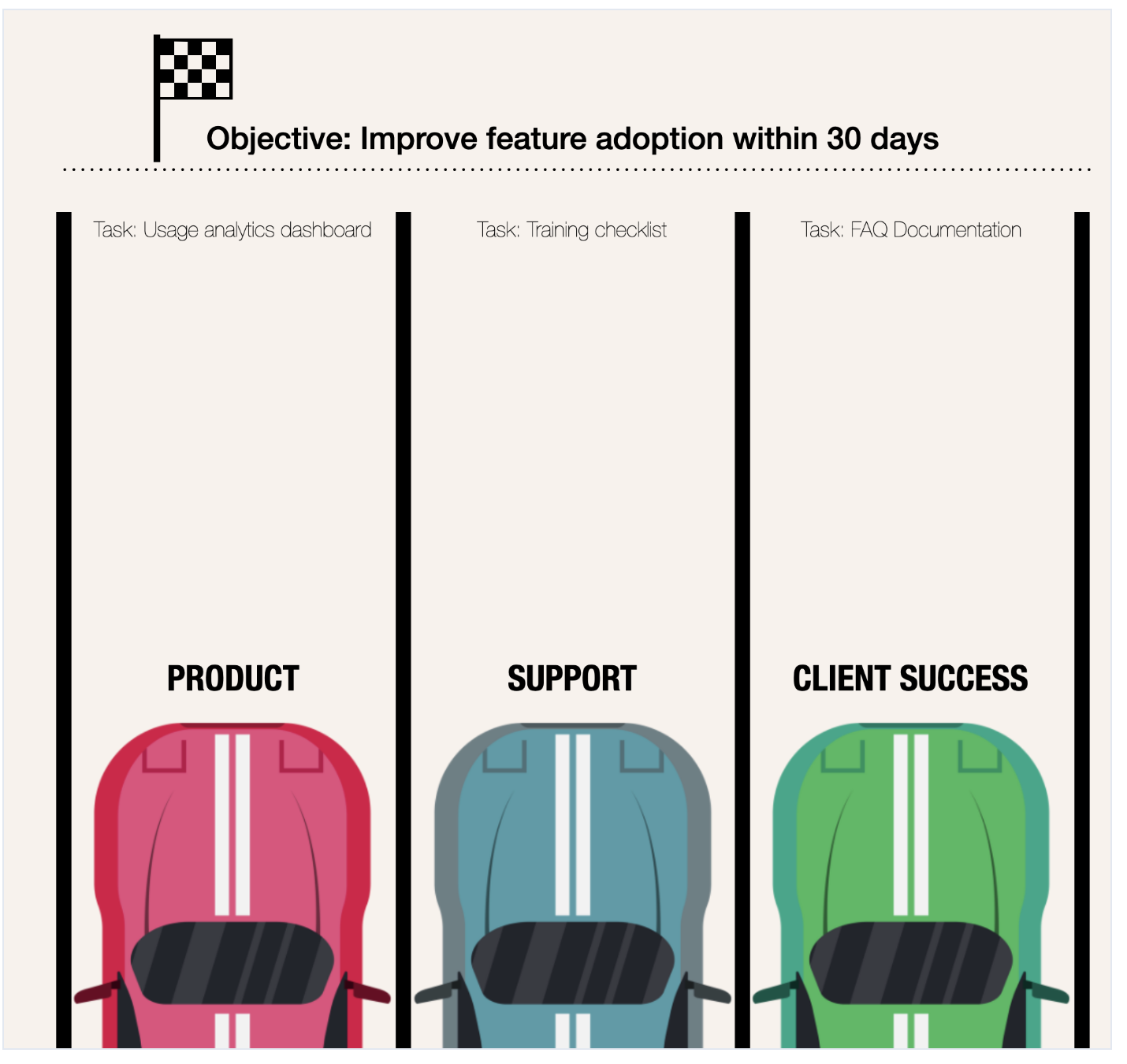
System-Level Diagnosis
A consistent pattern emerged across teams:
Product velocity was prioritized over adoption readiness
Teams operated with misaligned success metrics
Knowledge transfer between teams was informal and inconsistent
Customer-facing teams absorbed the cost of misalignment through escalations, workarounds, and reactive support
In effect, new features increased operational load faster than the organization could support them.
This reframed the core problem:
"Any Product North Star would fail unless the operating system of the organization was redesigned to support it."
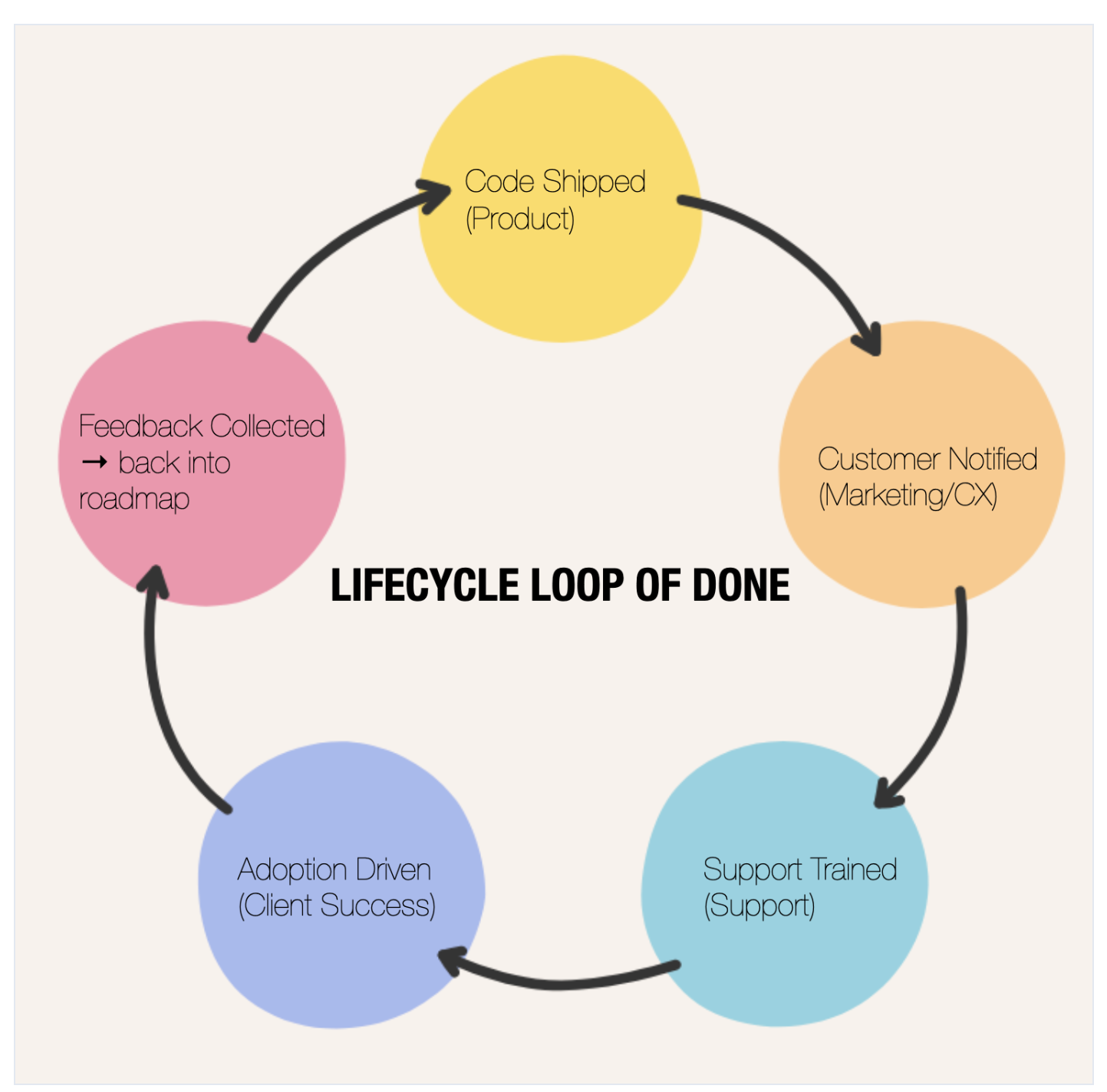
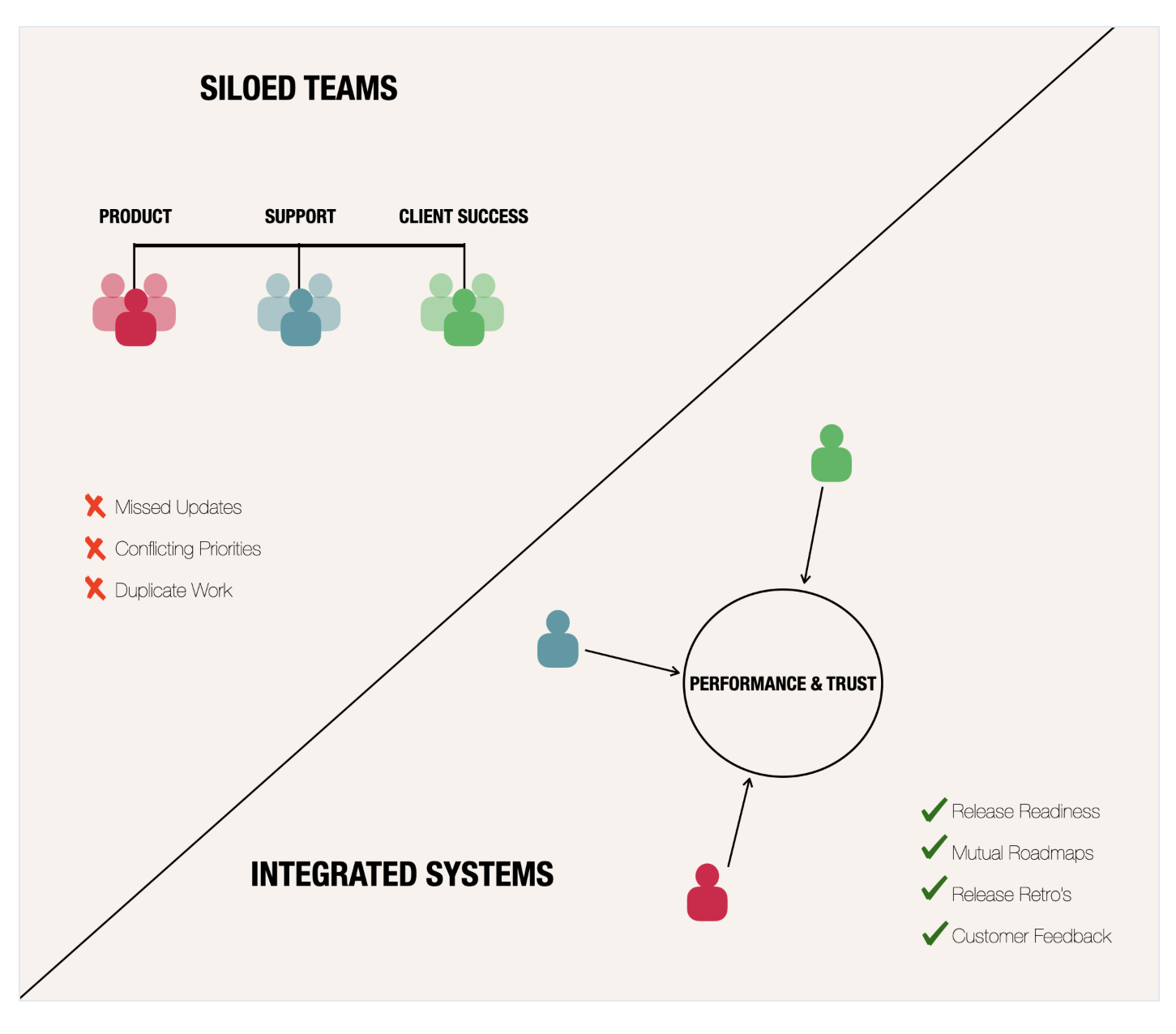
Proposed Lifecycle Loop framework for cross-functional coordination
Operational Gaps Identified
The primary gaps were systemic, not tactical:
No shared definition of "done"
Across Product, Support, and CX
No operational readiness checkpoint
Before feature release
No closed feedback loop
Connecting post-release issues back to prioritization
No single source of truth
For customer-impact tradeoffs
As a result, the organization optimized for speed while externalizing cost to downstream teams and customers.
System Interventions Proposed
The proposed Product North Star was intentionally designed as a coordination mechanism, not a vision statement.
Supporting system interventions included:
Outcome-based OKRs shared across Product, Support, and CX
Explicit release readiness criteria tied to adoption and support capacity
Cross-functional rituals to surface operational risk early
Transparency artifacts to make tradeoffs visible and discussable
Together, these interventions were designed to:
Reduce rework and escalation
Improve adoption and trust
Protect long-term velocity by addressing operational debt

Organizational Constraints and Decision Context
While the diagnosis and proposed interventions were directionally aligned with long-term success, the organization ultimately prioritized short-term delivery velocity over the cross-functional changes required to implement them.
Without sustained executive sponsorship across both Product and customer-facing functions, the organization was not positioned to operationalize system-level change at that time.
This was a conscious tradeoff, not a misunderstanding.
Risks Identified and Communicated
I explicitly documented the risks of continuing without addressing the operational gaps, including:
Increasing support burden
Slower feature adoption
Erosion of customer trust
Long-term velocity loss due to rework and reactive fixes
These risks were communicated clearly so leadership could make an informed decision about priorities.
What I Did in Response
Recognizing the constraint, I focused on ensuring the work still delivered value by:
Translating findings into reusable alignment frameworks
Documenting system risks and dependencies for future reference
Socializing insights with adjacent teams to support incremental adoption
Preserving the diagnostic artifacts as a baseline for future strategy work
This ensured the engagement produced durable insight, even without immediate implementation.