
Designing Near-Term Impact in a Legacy Healthcare Enrollment SystemA Design Science Case Study in Constraint-Driven Public Sector Systems
Overview
Role: UX Experience Associate Director (MU/DAI)
Client: Texas Medicaid & Healthcare Partnership (TMHP), via Accenture (state contractor)
Industry: Public Sector Healthcare · Government Technology
Engagement Type: RFP Strategy, UX Systems Design, Technical Specification
Focus: Human-Centered Process Redesign · Content Governance · AI-Ready Knowledge Systems
The broader engagement included two complementary workstreams: (1) a future-state vision for an online enrollment application, and (2) a near-term intervention strategy operating within current system constraints. This case study documents the latter, emphasizing immediate, actionable changes to reduce human error and process inefficiency.

Problem Context
Texas Medicaid’s provider enrollment process is among the most complex in the United States. At the time of this engagement, enrollment was largely paper-based, policy-dense, and manually processed, even for experienced providers. Many healthcare providers hired third-party specialists simply to navigate the application correctly TX Medicaid Provider Enrollment.
Applications were submitted on paper and manually entered into a legacy system by Accenture staff. This introduced error at multiple points:
providers misinterpreting forms or submit incomplete information
processors inconsistently interpreting policies during data entry
applications cycling through months of rejection and rework
call centers overwhelmed by clarification requests and escalations TX Medicaid Provider Enrollment…
Critically, there was no central source of truth:
provider-facing instructions conflicted across web pages, PDFs, and call scripts
internal processor documentation had no ownership model or review cycle
“shadow guidance” emerged informally, creating systemic inconsistency TX Medicaid Provider Enrollment…
Design Constraint
This was a constraint-heavy environment:
legacy infrastructure could not be replaced
digital research tooling did not yet exist
automation was not feasible in the short term
recommendations had to work within the existing system
The design challenge was therefore not “how do we redesign the system,” but:
How do we reduce error, confusion, and rework now, while creating a foundation for future automation later?
Research Approach
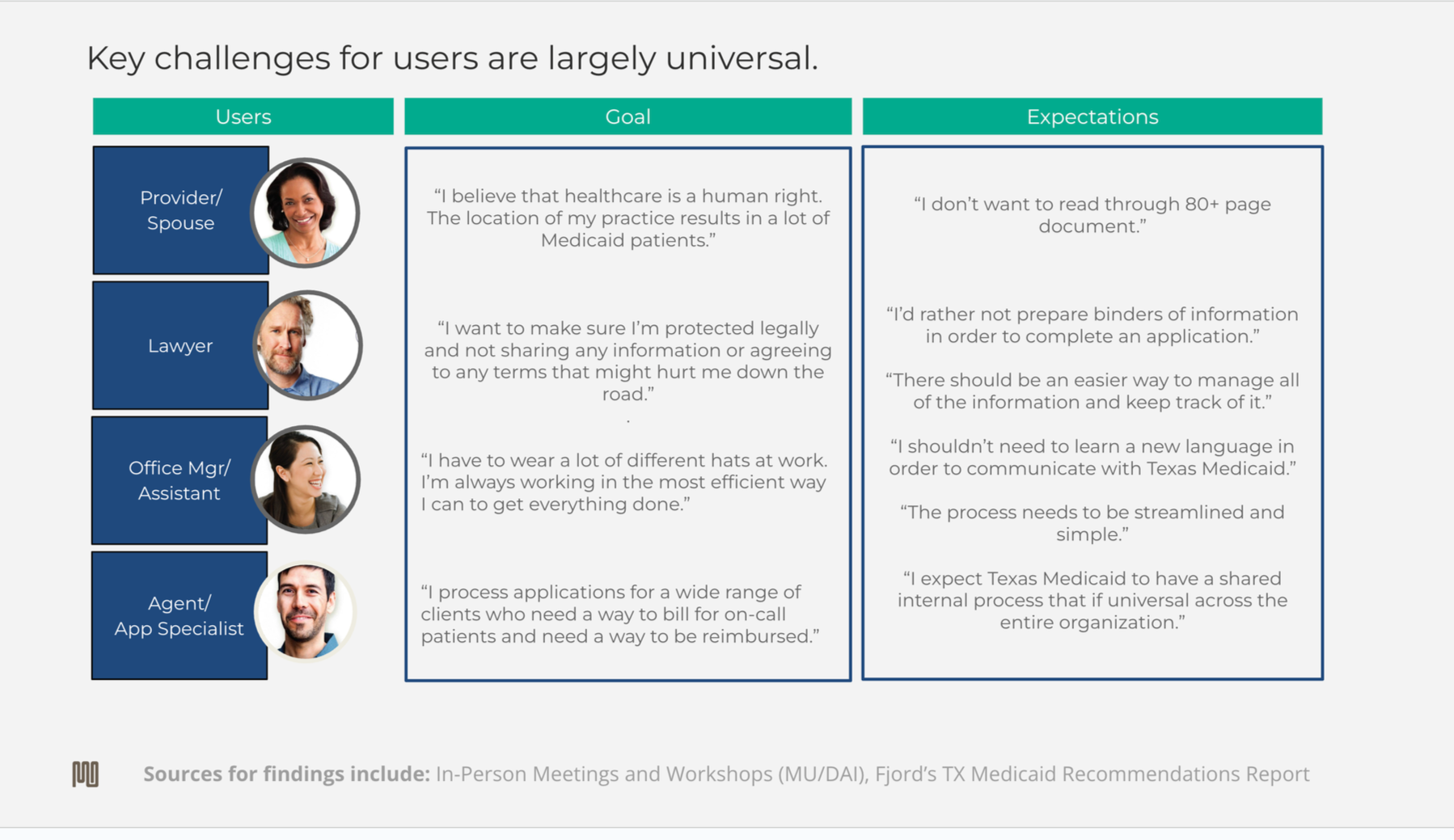
I used a mixed-methods, immersive research approach to understand how the system actually operated across roles, not how it was documented.

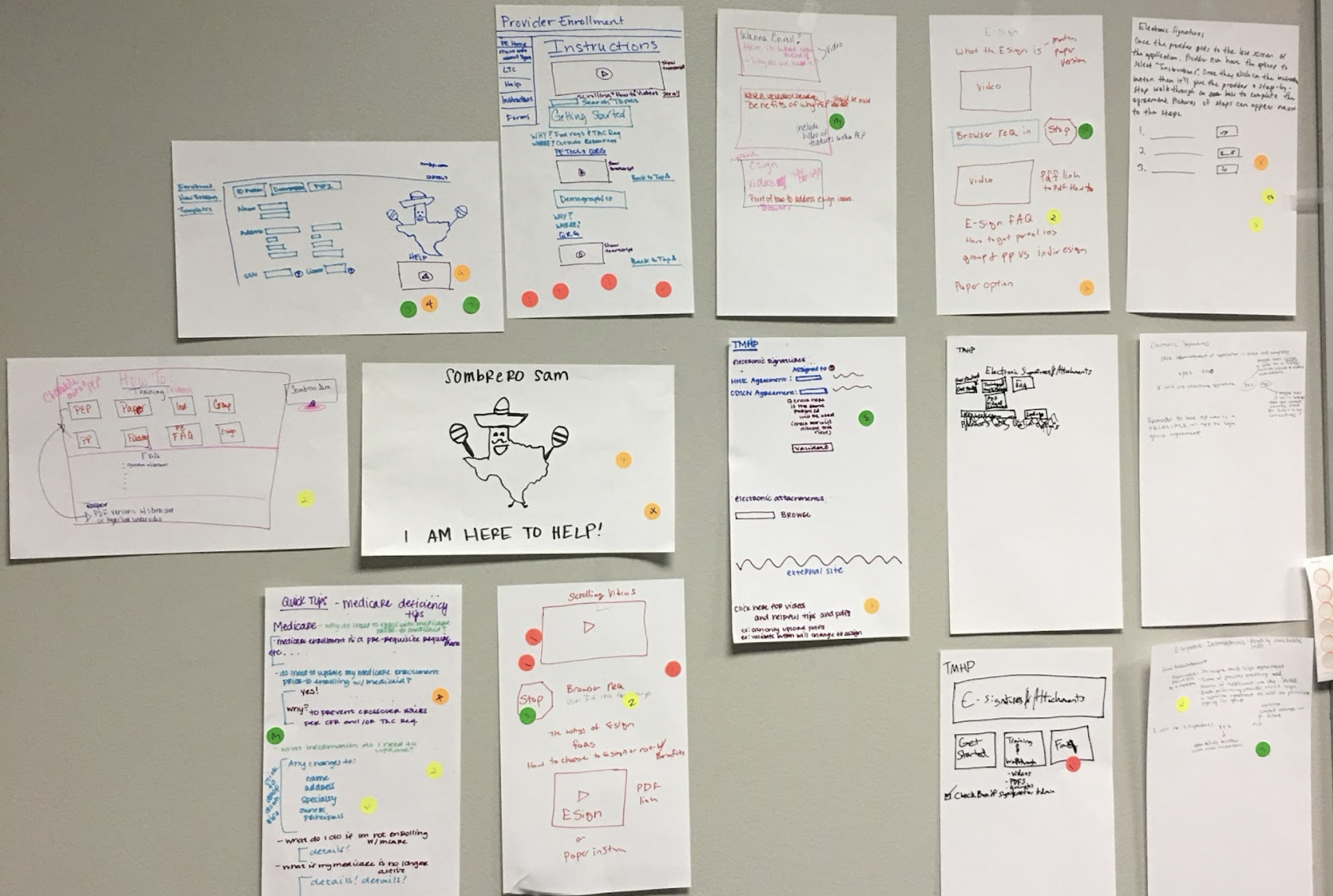
This space served as both a synthesis mechanism and a collaborative artifact, fostering alignment and trust among policy, processing, and support teams.
Methods
Shadowed Accenture processors entering paper applications into the legacy system, documenting error patterns, decision fatigue, and policy ambiguity
Conducted contextual interviews with processors and QA leads
Facilitated cognitive walkthroughs with contact center agents using real support calls
Reviewed, rejected, and escalated application packets to identify systemic patterns
Mapped provider and processor journeys to surface rework loops and friction points
I created a physical “research war room” at the TMHP office:
manually transcribed interview notes, quotes, and form analysis onto Post-its
used affinity mapping and color-coded clustering to surface recurring breakdowns
invited TMHP stakeholders to walk the room with me, validating patterns and assumptions in real time
Operational KPI Analysis (Quantitative)
In addition to qualitative field research, this engagement incorporated quantitative analysis of operational performance data maintained by TMHP contractors (Accenture).
Method: Human KPI & Performance Data Analysis
I analyzed human performance metrics used by TMHP processing specialists to monitor enrollment throughput and support operations. These KPIs were not part of an automated analytics system; they were maintained through internal tracking tools and spreadsheets and reflected the realities of a legacy, paper-based workflow.
The metrics reviewed included:
Contact center resolution time
Volume and frequency of application rework
Application rejection and resubmission rates
Escalation patterns between processors and call center agents
Time-to-enrollment delays attributable to form errors or policy misinterpretation
These quantitative signals were used to:
Identify systemic bottlenecks rather than isolated usability issues
Correlate observed qualitative pain points with measurable operational impact
Validate where content ambiguity and process breakdowns were driving rework and escalation
Establish a baseline for improvement against which near-term recommendations could be evaluated
Because the data were manually entered and operationally constrained, the analysis focused on trend direction and pattern consistency rather than statistical precision. This approach was appropriate to the system’s maturity and avoided overconfidence in noisy or incomplete data.

Note: This image is illustrative and does not contain real project data. It is included to convey the sophistication of the data analyzed during the engagement.
Design Artifacts
Rather than proposing a full system overhaul, I designed intermediate artifacts that addressed immediate pain while enabling long-term evolution.
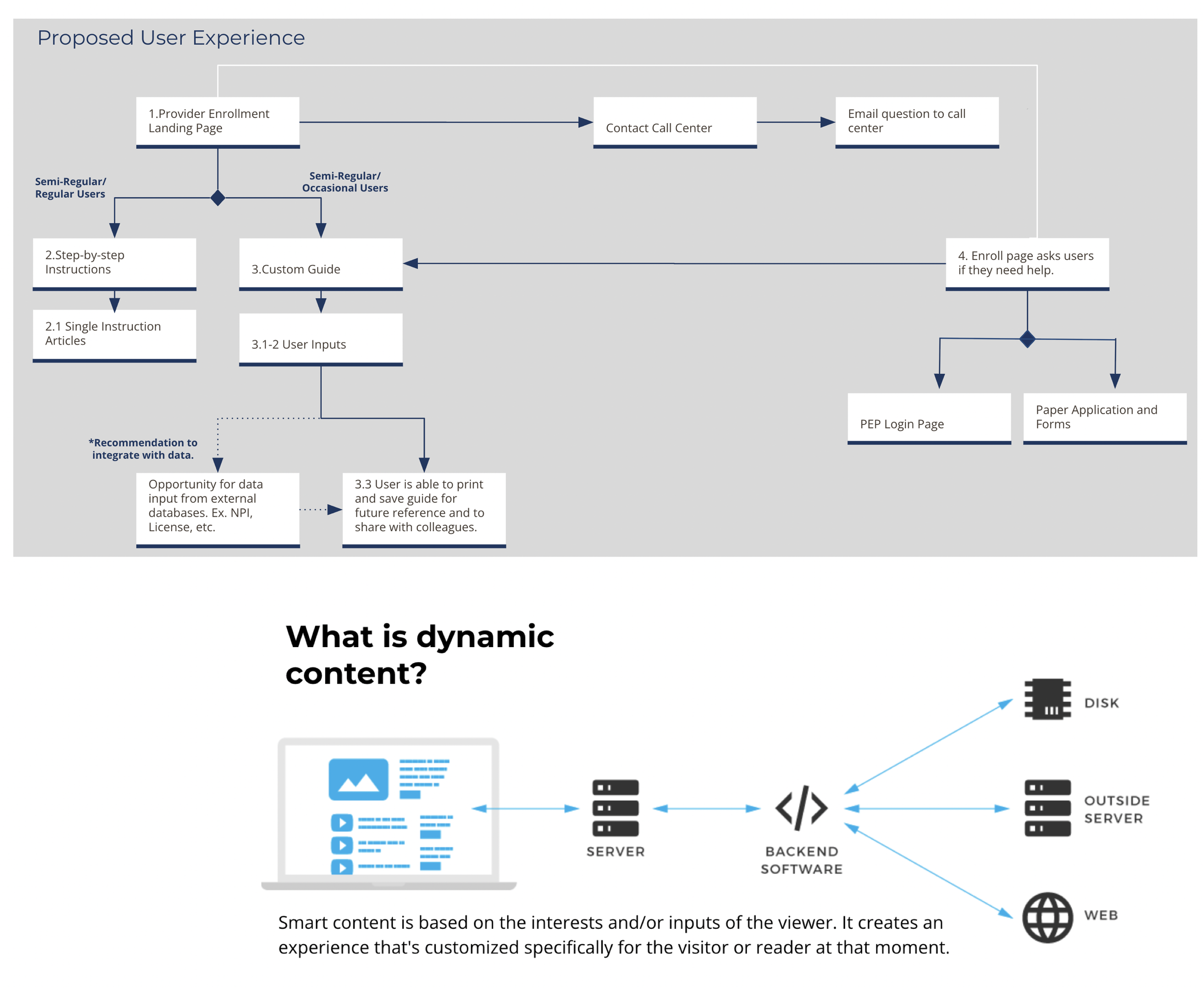
Artifact 1: Content Governance Framework (Foundation for Automation)
I proposed and initiated a content governance program that included:
a full inventory of public- and staff-facing content
ownership and review cycles aligned to policy changes
plain-language and UX writing standards
lightweight version control to prevent drift
a shared knowledge base structure for processors and call center agents
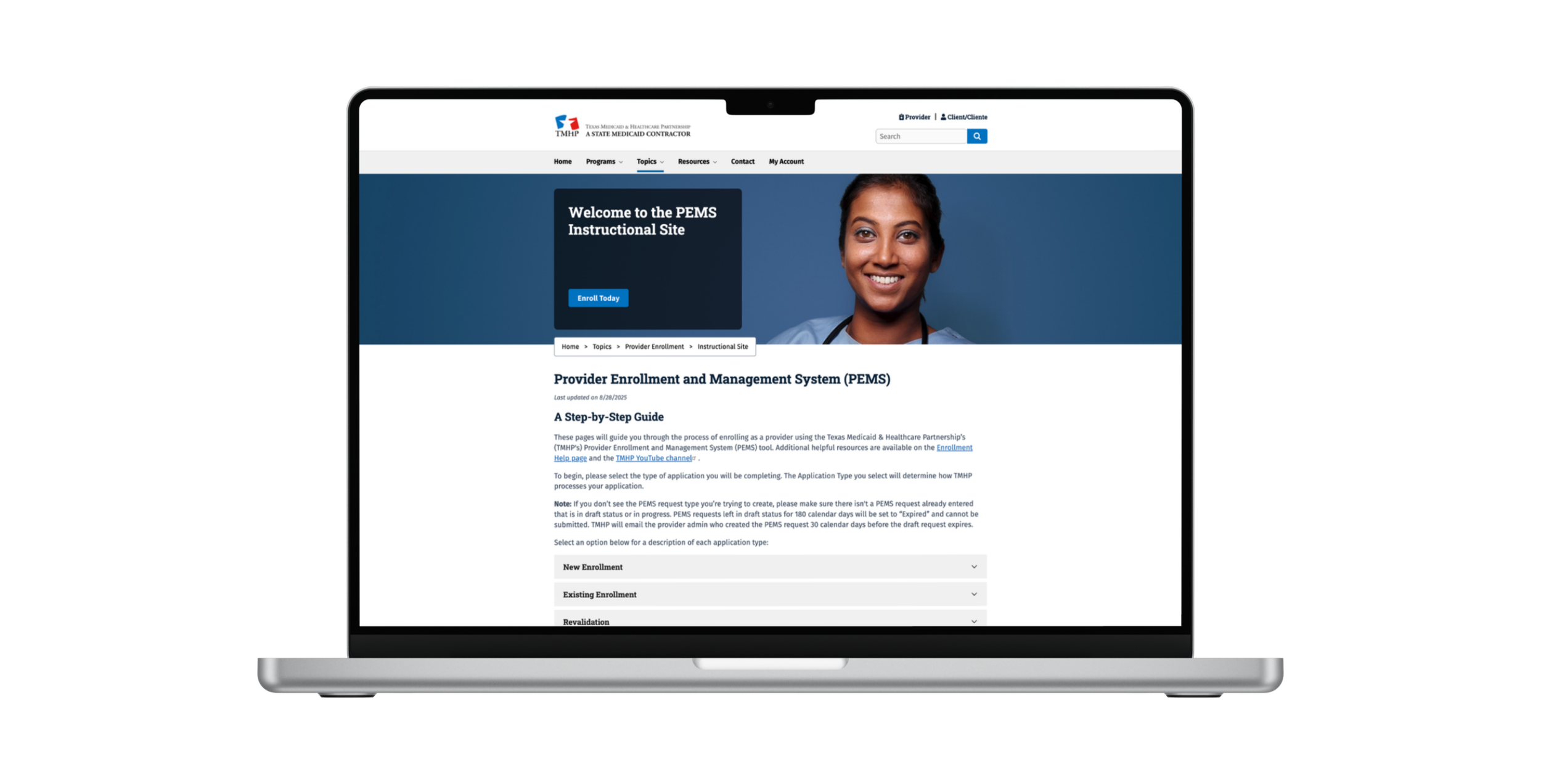
I also designed an information architecture and taxonomy that:
classified content by task, provider type, and policy area
enabled modular reuse across channels
supported future AI-powered retrieval and assistance TX Medicaid Provider Enrollment…
This reframed IA as infrastructure, not navigation.
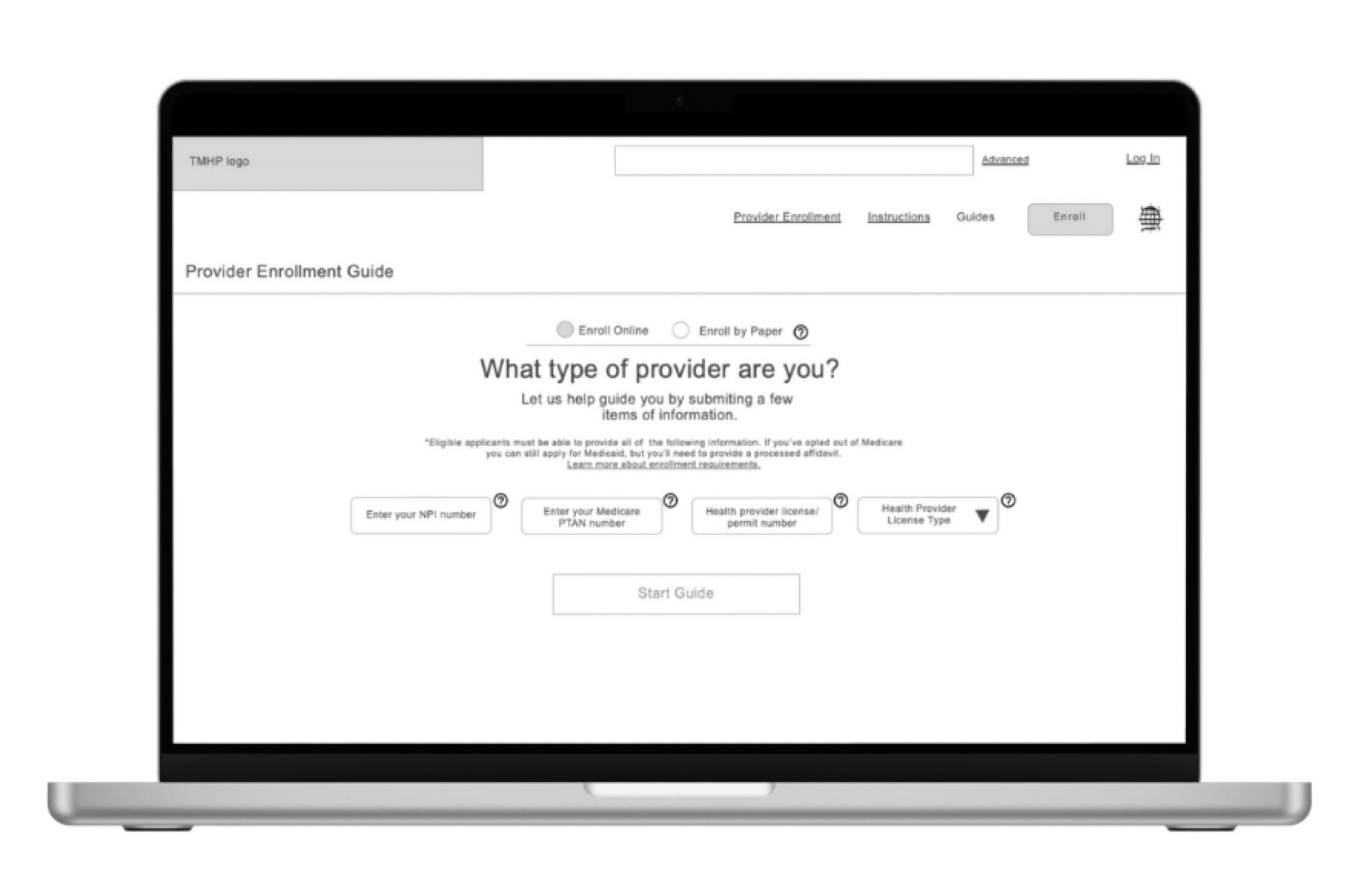
Artifact 2: Guided Support Tool (Logic-Based Decision Support)
To reduce errors before they enter the system, I designed and prototyped a guided support tool that:
asked providers a series of simple, logic-based questions
dynamically narrowed the scope of required forms and steps
produced a customized enrollment guide with only relevant content
reduced cognitive load and ambiguity at the point of submission
Example questions included:
What type of provider are you?
Will you bill Medicaid directly?
Are you part of a group practice?
The tool demonstrated how low-tech decision support could dramatically reduce error even within a paper-based system.
Core Insight
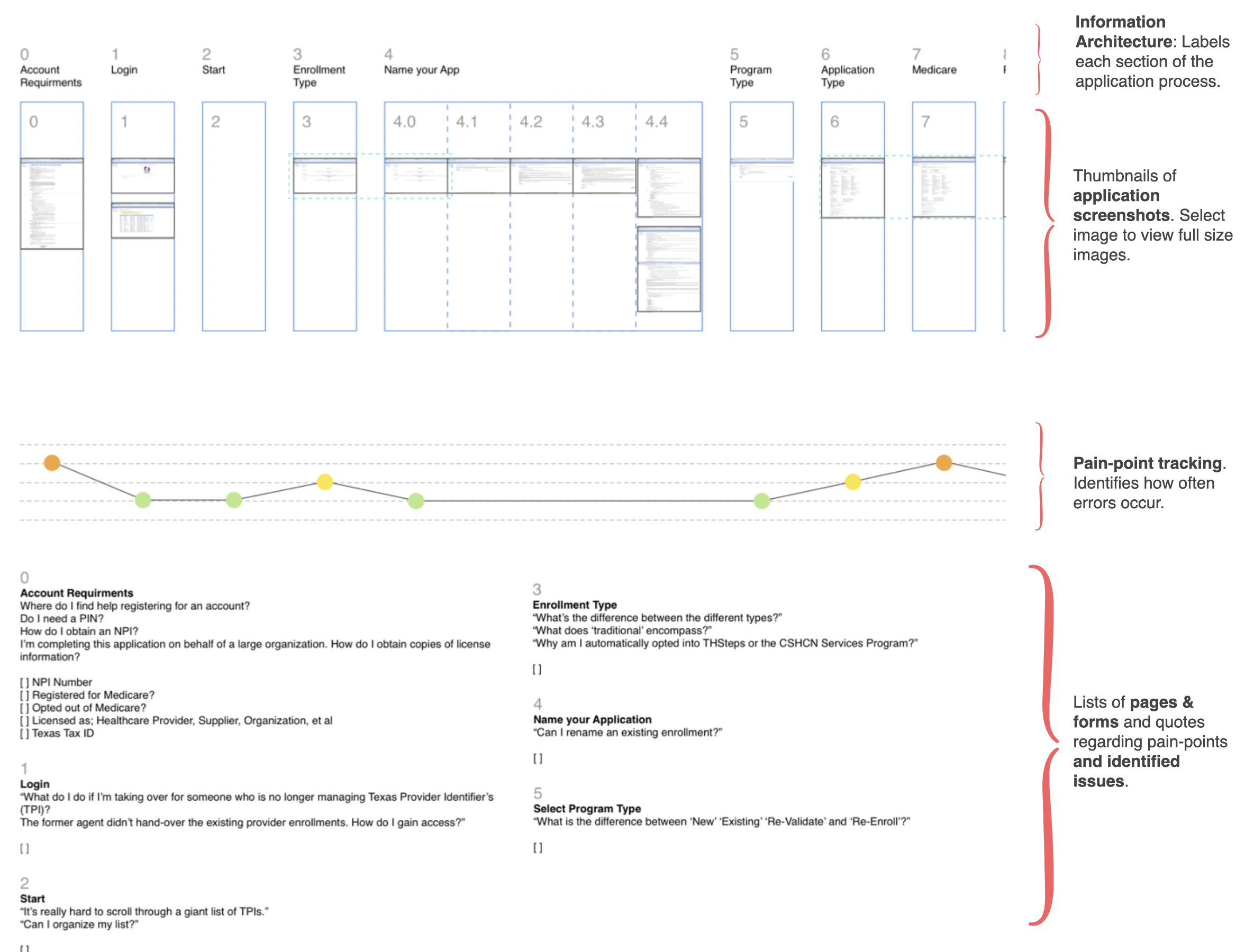
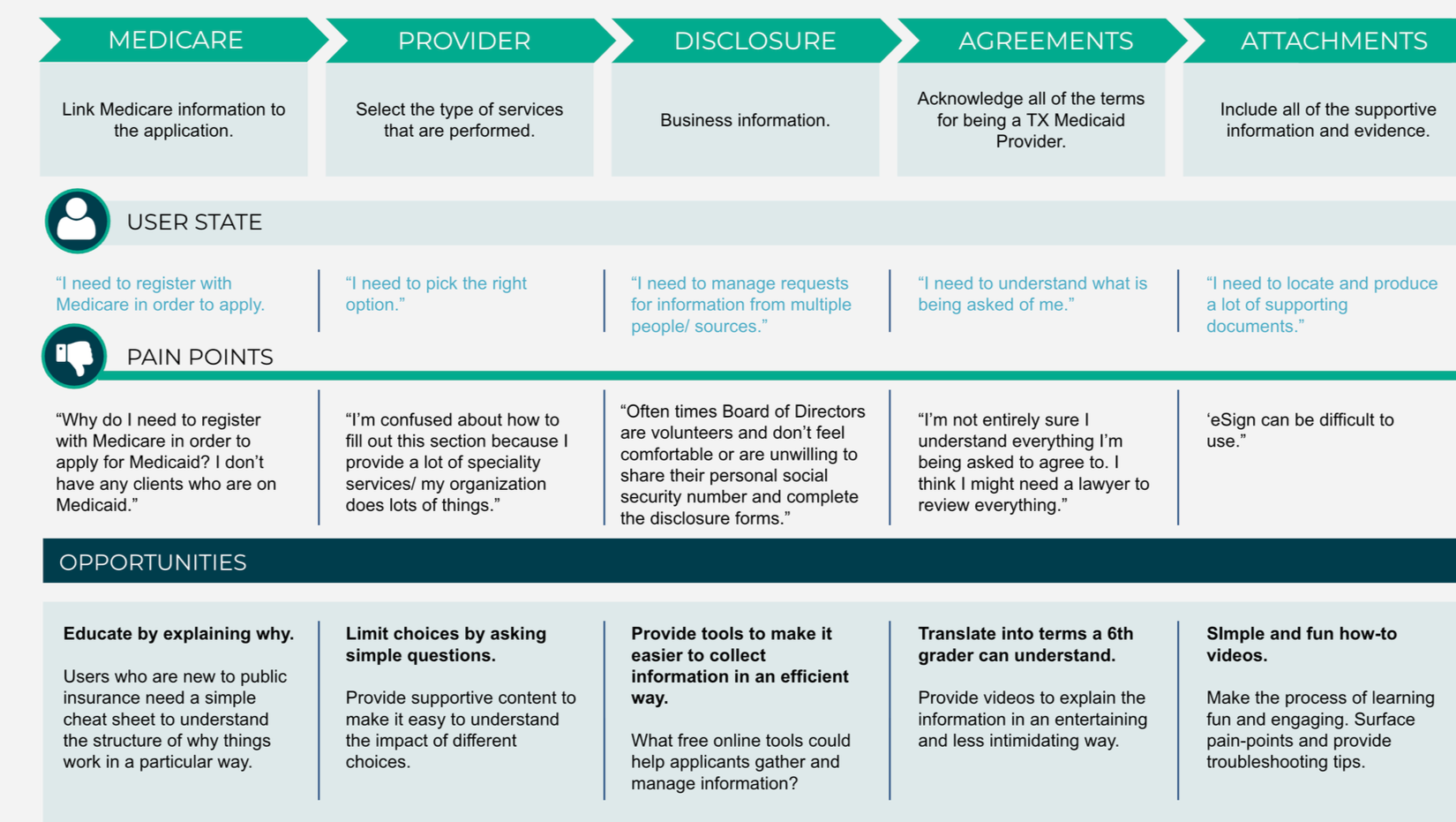
The most important finding was that many errors were not workflow failures, but content failures.
Inconsistent, outdated, and poorly governed content:
caused providers to submit incorrect applications
forced processors to rely on informal interpretations
drove repeated call center escalations
created cascading rework loops that no amount of training could fix TX Medicaid Provider Enrollment…
This reframed the problem:
Content was not a usability issue — it was a systemic blocker to transformation.
Without structured, governed, and policy-aligned content, neither efficiency nor automation was possible.
Evaluation & Outcomes
Although this was not a full system replacement, the interventions produced measurable impact:
Results
28% reduction in contact center resolution time
Decreased rework and application rejections
Improved provider confidence and processor efficiency
Strengthened alignment across policy, processing, and design
Established a foundation for scalable, AI-enabled knowledge systems TX Medicaid Provider Enrollment…
Feedback from providers and processors confirmed:
improved clarity
reduced uncertainty
increased confidence during submission
less reliance on call center escalation
Design Science Contribution
This project demonstrates several key design science contributions:
Constraint-Driven Innovation
Meaningful transformation can occur without ideal conditions if design focuses on structural leverage points.Content as System Infrastructure
Governed, modular, policy-aligned content is a prerequisite for automation — not a downstream optimization.Design as Knowledge Production
The artifacts produced (governance model, IA, guided tool) functioned as theory-in-use, not just deliverables.Human-Centered Foundations for AI
AI-ready systems begin with clarity, structure, and governance — not models.
What I Learned
This project reinforced a core principle of my design practice:
Transformation doesn’t require perfect systems — it requires clarity, collaboration, and artifacts that respect reality while preparing for the future.
By designing within constraints rather than around them, we moved an outdated public-sector process forward one deliberate step at a time — with impact that extended well beyond the immediate intervention